












Laser Tattoo and Permanent Makeup
Lightening Course in Panevėžys:
Theory and Practice
Laser lightening of tattoos and permanent makeup in Panevėžys is a modern technology that allows the pigment in the skin to be gradually reduced without damaging the surrounding tissues.
The procedure is often used to prepare the skin for a future cover-up, correct the shape of a design, or adjust color intensity.
The method is based on the principle of selective photothermolysis, in which laser energy targets pigment particles and breaks them into smaller fragments. To work safely and effectively, a specialist must understand both the physical principles of laser operation and the way the skin reacts to the procedure.

 Create a sketch in the VEAN TATTOO AI generator

Theoretical Block
At the beginning of the training, participants study the key physical and biological processes associated with laser pigment lightening.
This stage helps explain how laser impulses affect pigment and what processes occur in the skin after the procedure.
The course program includes:
- the principle of selective photothermolysis
- the photoacoustic effect and mechanisms of pigment fragmentation
- wavelengths of 1064 nm and 532 nm and their application for different pigments
- differences between nanosecond and picosecond pulses and their practical significance
- skin structure: epidermis, dermis, and features of the eyebrow and lip areas
- the process of pigment phagocytosis and its behavior in tissues
- the reaction of different pigments to laser exposure
- skin phototypes and selection of optimal laser parameters
- indications and contraindications for the procedure
- possible side effects and methods of their prevention
The knowledge gained allows specialists to better understand pigment behavior in the skin and predict the outcome of the procedure. It also helps them more accurately select equipment parameters and plan the lightening process.
A separate theoretical section is devoted to the specifics of permanent makeup lightening. It discusses potential shade changes and the characteristics of working with dense mineral pigments.
Practical Block
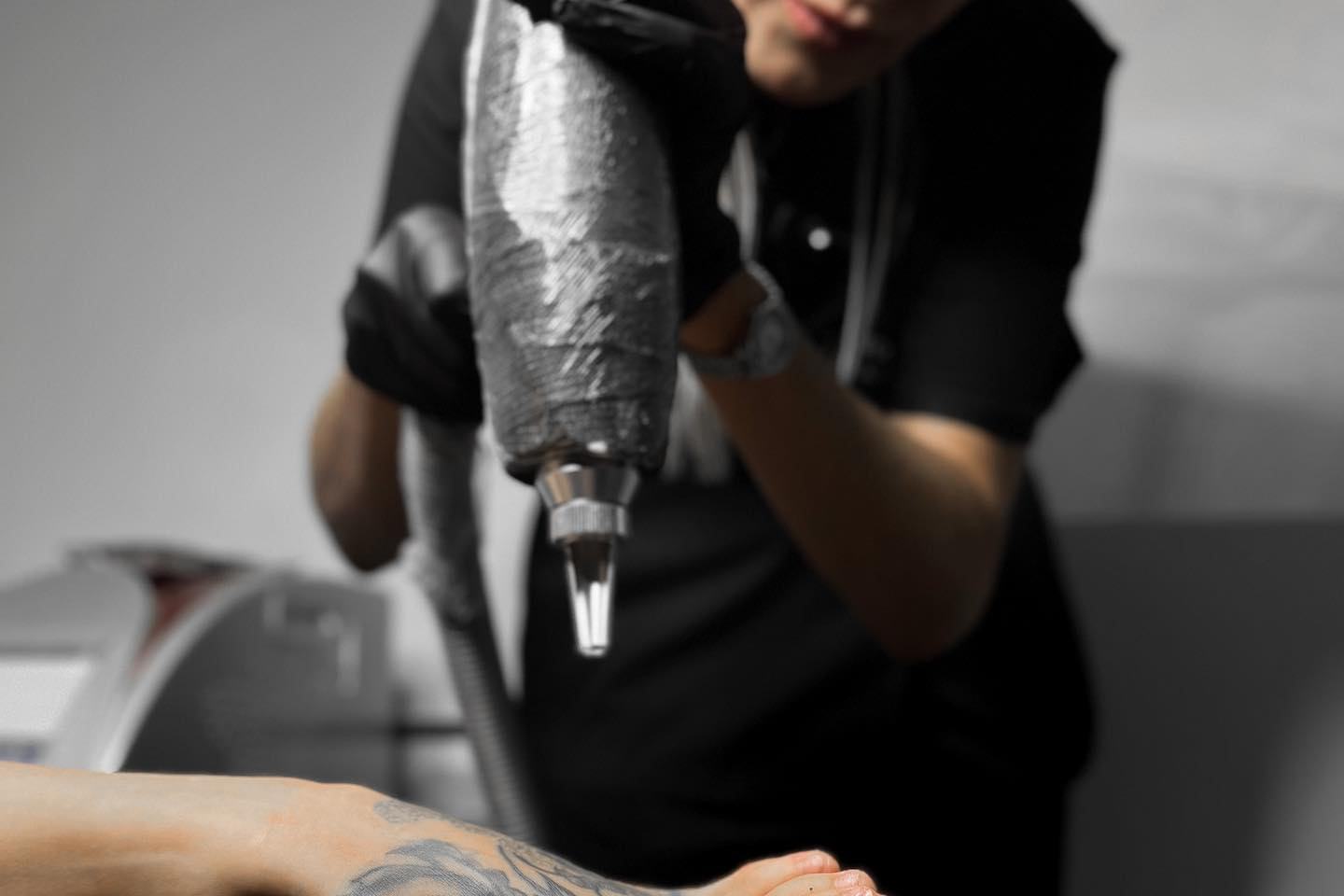
The practical part of the training takes place on models under the supervision of an instructor.
This allows participants to apply theoretical knowledge in practice and safely learn how to work with laser equipment.
During the training participants:
- conduct an initial consultation and analyze the treatment area
- determine the depth and density of pigment in the skin
- select laser parameters (energy, frequency, and spot size)
- practice the technique of an even laser pass
- observe tissue reactions during the procedure
- develop a safe treatment protocol
During practice, specialists learn how to evaluate skin reactions and adjust laser parameters depending on the situation. This helps make the procedure safer and achieve a better aesthetic result.
Special attention is given to delicate areas such as eyebrows, eyelids, and lips, where maintaining skin integrity and a natural appearance is especially important.
Practice on Models
An important part of the training is independent work on models under the supervision of a mentor. This format allows participants to gain real practical experience.
This allows participants to:
- develop correct working technique
- learn to predict the lightening results
- control the intensity of laser exposure
- properly plan intervals between procedures
Working with models helps specialists better understand the dynamics of pigment lightening and the skin healing process. This experience allows them to plan treatment courses more accurately.


Training Outcome
After completing the course, specialists gain both theoretical knowledge and practical skills necessary for professional work with laser lightening.
This allows them to work safely and effectively with tattoos and permanent makeup.
After completing the course, the specialist:
- understands the physical and biological principles of laser pigment lightening
- knows how to select parameters for different skin phototypes
- works with tattoos and permanent makeup of varying pigment density
- reduces the risk of complications
- professionally guides the client through all stages of recovery
The acquired knowledge and skills enable specialists to work with modern laser technologies and apply a scientifically based approach to pigment lightening. The course is designed for cosmetologists, laser technology specialists, tattoo artists, and permanent makeup artists who want to expand their professional expertise.
Conclusion
Laser lightening of tattoos and permanent makeup in Panevėžys is a procedure that requires not only technical skills but also a deep understanding of the biological processes occurring in the skin. Professional training helps specialists work safely, predict results, and choose the optimal treatment strategy for each procedure.


