






















Tattoo Lightening with Removers
Course in Vilnius: Theory and Practice
Tattoo lightening using removers in Vilnius is a controlled chemical transdermal method that allows pigment to be gradually removed from the dermal layer of the skin.
During the procedure, a specialized solution is applied that helps draw pigment toward the skin surface, where it is gradually eliminated during the healing process. Unlike laser techniques, this method is based on the chemical extraction of pigment and the natural regenerative mechanisms of the skin. For this reason, a specialist must understand not only the procedural technique but also the biological processes that occur in the skin during healing.
Our course provides a strong theoretical foundation and practical skills necessary for safe and effective work. The training program is designed to help specialists understand the mechanism of the procedure and apply it in practice according to professional safety standards.

 Create a sketch in the VEAN TATTOO AI generator

Theoretical Block
The theoretical part of the training focuses on the anatomical, physiological, and chemical foundations of the method.
Participants gain an understanding of how pigment is retained in the skin and what factors influence the outcome of the procedure.
Special attention is given to skin structure, pigment fixation mechanisms, and the chemical reactions that occur when removers are used. This knowledge allows specialists to predict results and choose the correct working strategy.
The course program includes:
- skin structure: epidermis, basement membrane, papillary and reticular dermis
- mechanism of tattoo pigment fixation by macrophages
- chemical composition of modern removers (acidic, alkaline, saline formulas)
- principle of osmotic pigment displacement
- controlled inflammatory response and stages of tissue regeneration
- specifics of working with organic and inorganic pigments
- depth of remover application and its influence on the result
- indications and contraindications
- possible complications (scarring, hypo- and hyperpigmentation) and their prevention
- aseptic and antiseptic protocols
The theoretical knowledge gained allows specialists to better understand pigment behavior in the skin and the biological mechanisms of the procedure. This helps professionals make informed decisions when working with tattoos of different densities and ages.
A separate section of the course is devoted to skin biomechanics and result prediction. It analyzes how pigment density, tattoo age, and pigment depth influence the lightening process.
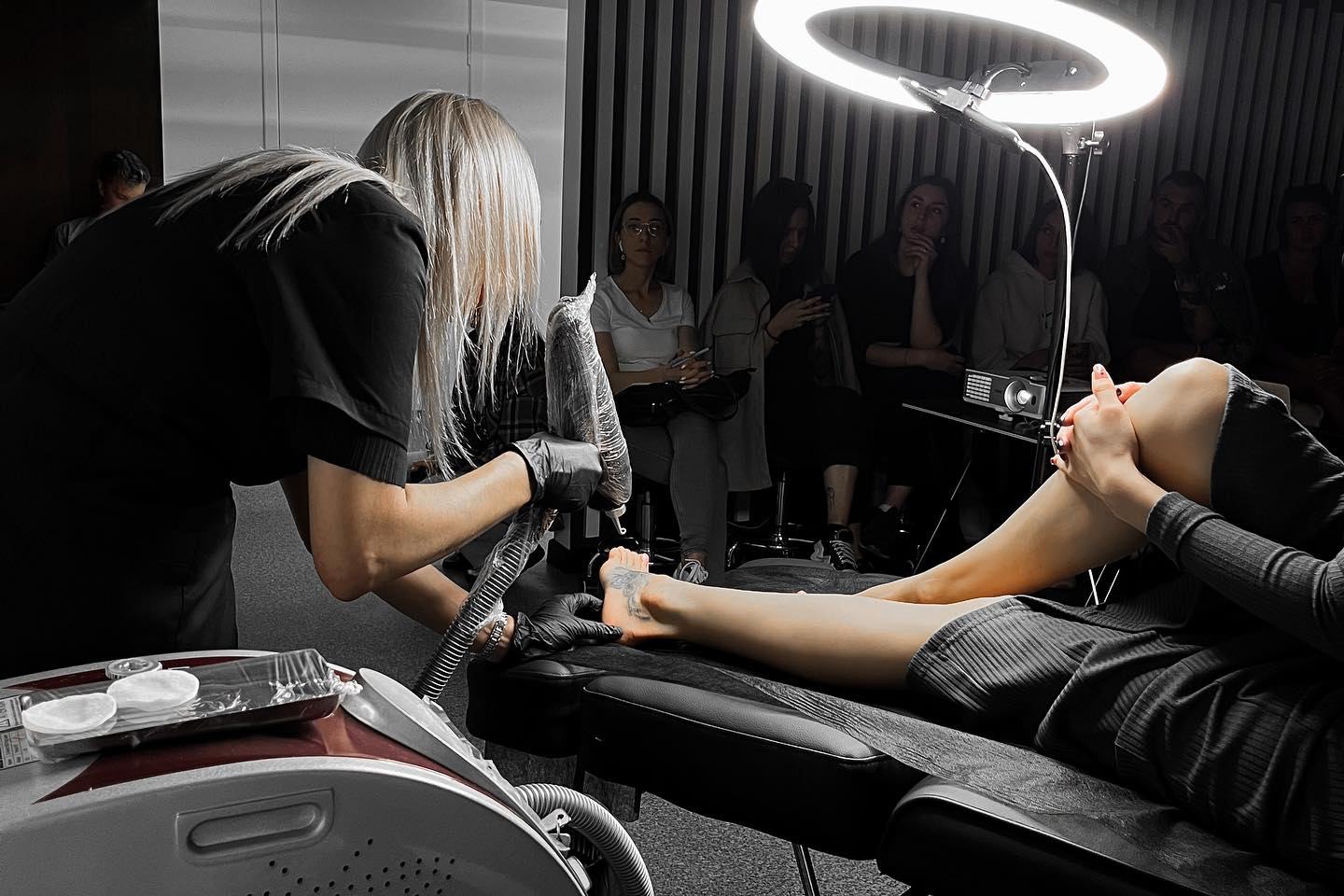
Practical Block
The practical part of the training is conducted on models under the supervision of an instructor.
This allows participants to safely reinforce theoretical knowledge and practice the main stages of the procedure.
During practice, particular attention is given to technique, tissue reaction monitoring, and adherence to safe working protocols. Participants learn to control the depth of impact and ensure even treatment of the skin.
During practical training participants:
- perform an initial examination and collect medical history
- determine pigment type and its depth in the skin
- select the appropriate remover application technique
- control the depth of tissue trauma
- create an even treatment area
- practice post-procedure care protocols
Practical training allows specialists to observe how the skin reacts to the procedure in different situations. Participants also learn to adjust their technique depending on pigment density and individual skin characteristics.
Special attention is given to reducing the risk of scarring and properly guiding the client through the healing period. This is essential for achieving a safe and aesthetically pleasing result.
Practice on Models
Independent work on models is one of the most important stages of training. It takes place under the supervision of a mentor and allows participants to gain real practical experience.
This stage helps develop professional skills and teaches specialists how to make decisions in real working situations. Participants also learn how to evaluate tissue reactions and plan treatment courses.
This allows participants to:
- develop correct hand positioning and technique
- learn to control the depth of impact
- evaluate tissue reaction dynamically
- properly plan intervals between procedures
Working with models helps specialists better understand the healing process and the dynamics of pigment removal. This experience allows them to plan further procedures more accurately and reduce the risk of complications.


Training Outcome
After completing the course, specialists gain a comprehensive understanding of the tattoo lightening method using removers.
This enables them to apply the technique safely and professionally in practice.
In addition to theoretical knowledge, participants gain practical experience and learn to work according to professional safety standards. This ensures high-quality results and proper client support.
After completing the course the specialist:
- understands the pathophysiology of the pigment removal process
- is able to work safely with different skin types
- controls the depth and intensity of the procedure
- minimizes the risk of complications
- professionally guides the client through all stages of healing
The acquired skills allow specialists to work with tattoo lightening techniques at a high professional level. The course is designed for permanent makeup artists, tattoo artists, cosmetologists, and professionals who want to expand their professional competencies.
Conclusion
Tattoo lightening using removers in Vilnius is a complex procedure that requires knowledge, precision, and a professional approach. Proper training allows specialists to perform the procedure safely and effectively manage the healing process.
Professional preparation helps to predict results more accurately and choose the optimal treatment strategy for each client. This ultimately leads to safe and aesthetically successful outcomes.


