Yakuza Tattoo: Meaning, Symbols and Japanese Tradition
 Alina Balčiūnaitė
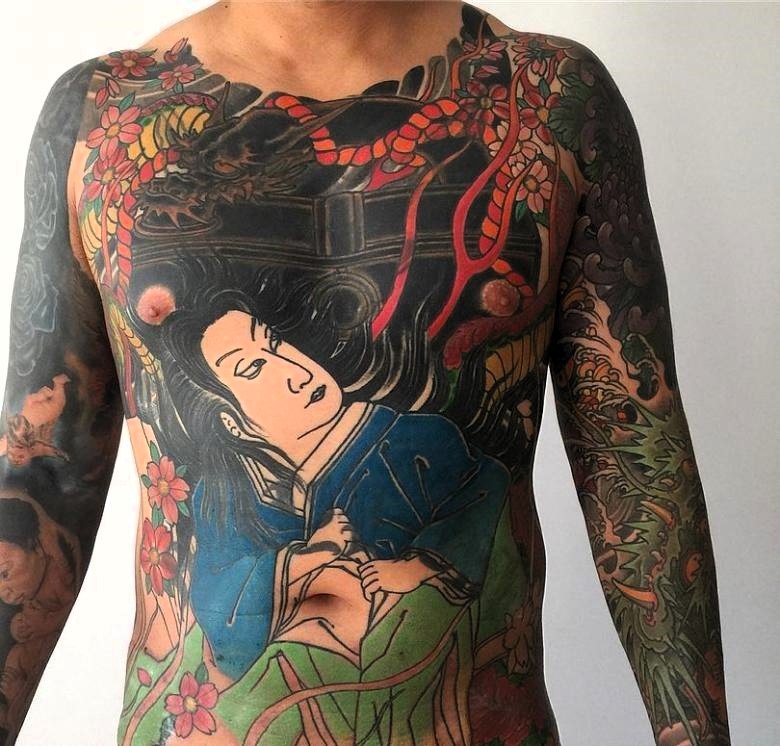
A Yakuza tattoo is rarely a small isolated picture.
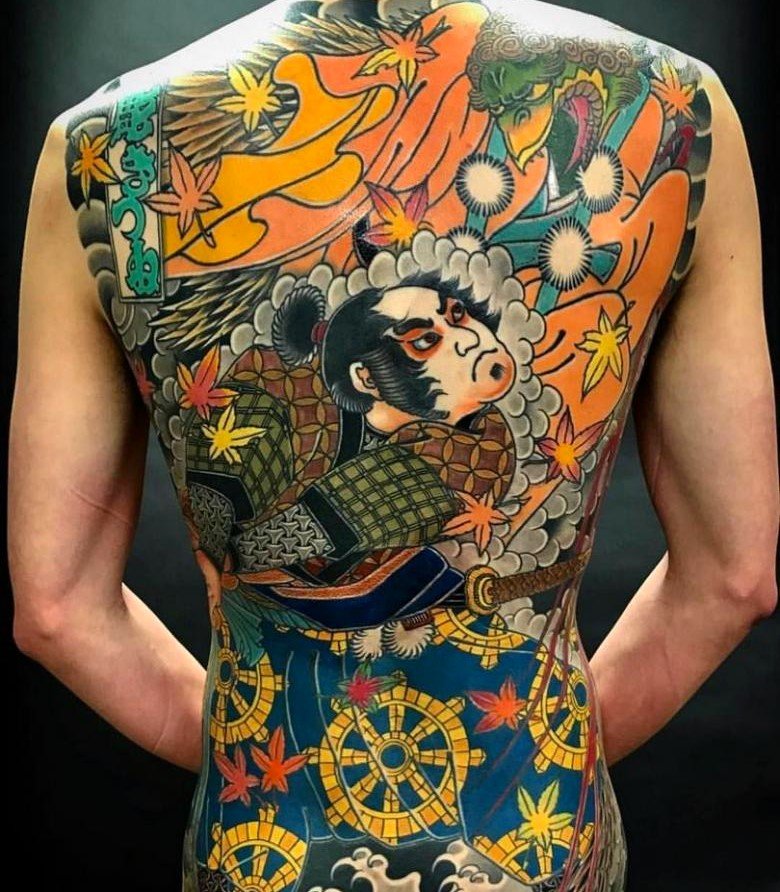
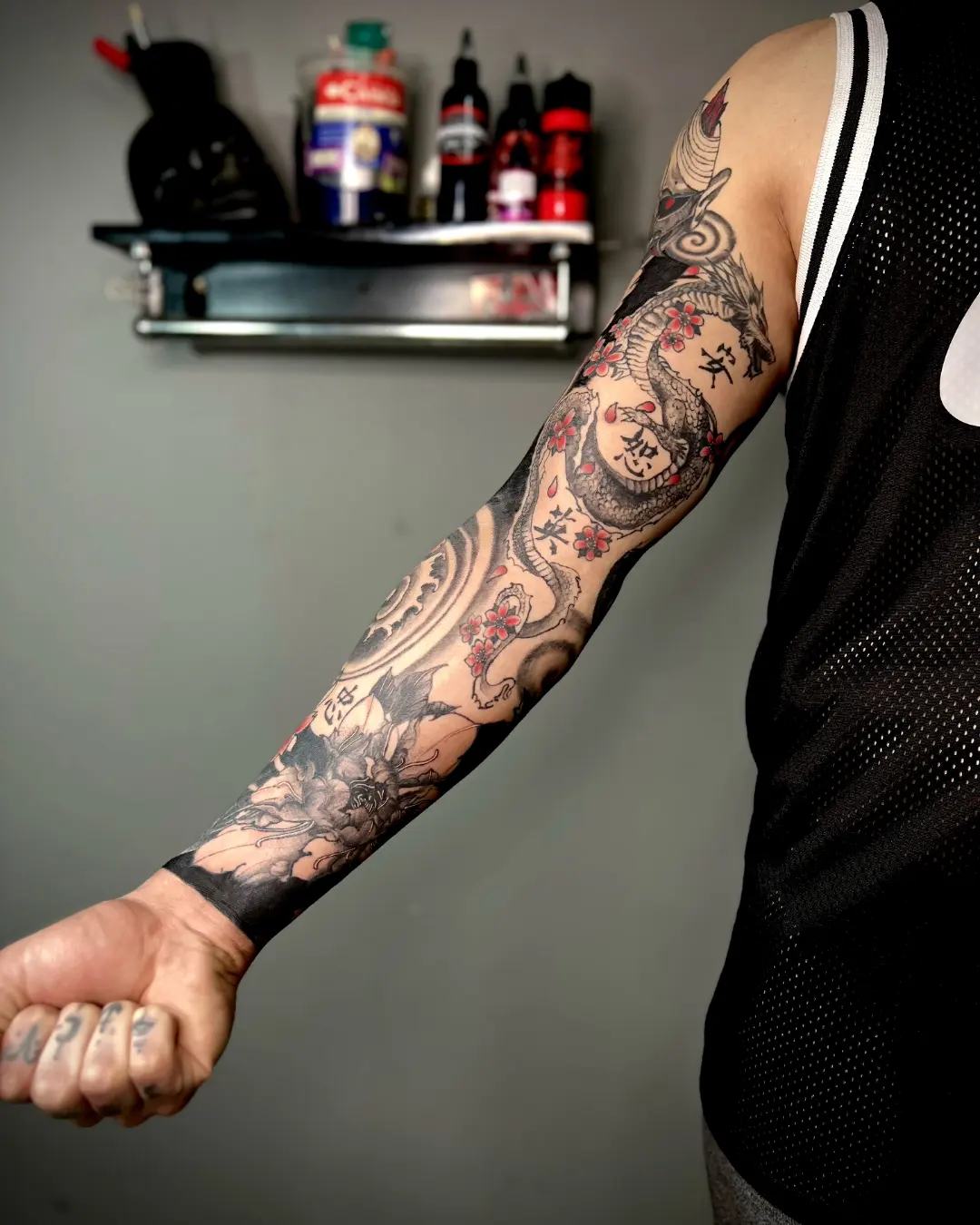
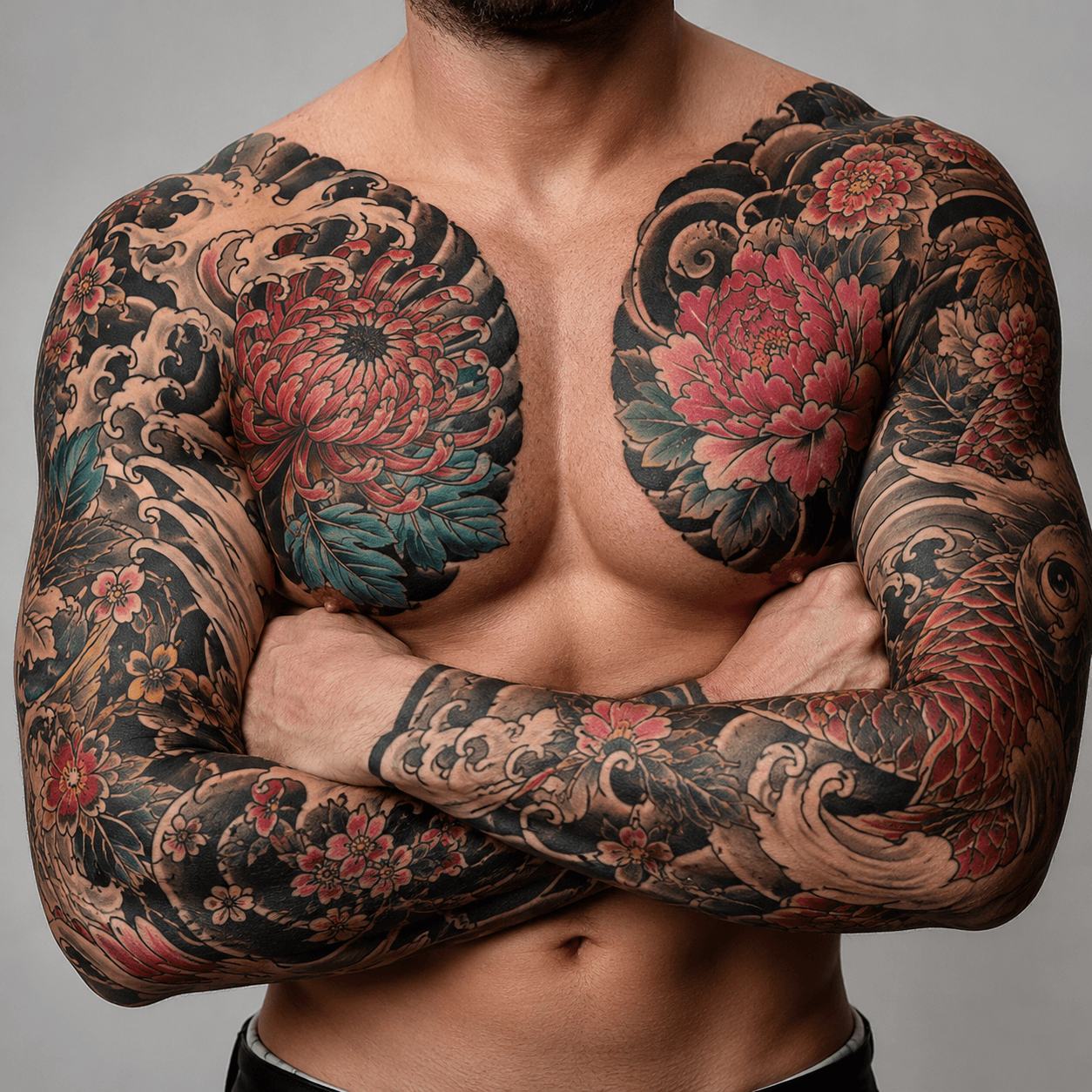
In traditional Japanese visual culture, it is often planned as a large scene that connects mythology, folklore, nature and personal narrative. The artwork may cover the back, chest, arms or legs, with every part supporting the whole idea.
Its roots go back to the Edo period (1603-1868), when tattoos were sometimes used as marks of punishment. Later, full-body work became associated with status, loyalty, endurance and belonging within Yakuza culture. Dragons, koi fish, samurai, flowers, waves and masks helped turn the body into a continuous visual story.
Today, a Japanese Yakuza tattoo is usually discussed within the wider context of irezumi and traditional Japanese tattoo art. Such sketches need careful planning, because one added flower, wave or mask changes the mood of the entire piece.

 Create a sketch in the VEAN TATTOO AI generator

Yakuza Tattoo Meaning: What the Designs Represent
The meaning of these works depends on the symbols, placement and overall layout.
They are rarely chosen as random decoration: a single scene may speak about a difficult path, protection, discipline, loyalty or transformation.
Such imagery is often connected with:
- Courage - readiness to face danger, pressure and difficult decisions
- Endurance - the ability to go through a long process and remain committed to the result
- Honor - respect for a code, tradition, hierarchy or personal principles
- Loyalty - devotion to a group, family, idea or chosen path
- Protection - symbolic defense against misfortune, danger or negative energy
- Wisdom - experience, restraint and the ability to understand deeper meanings
- Transformation - change, recovery or a new stage in life
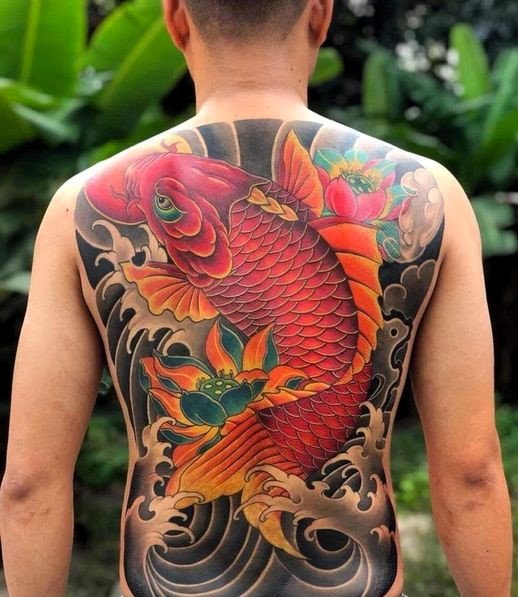
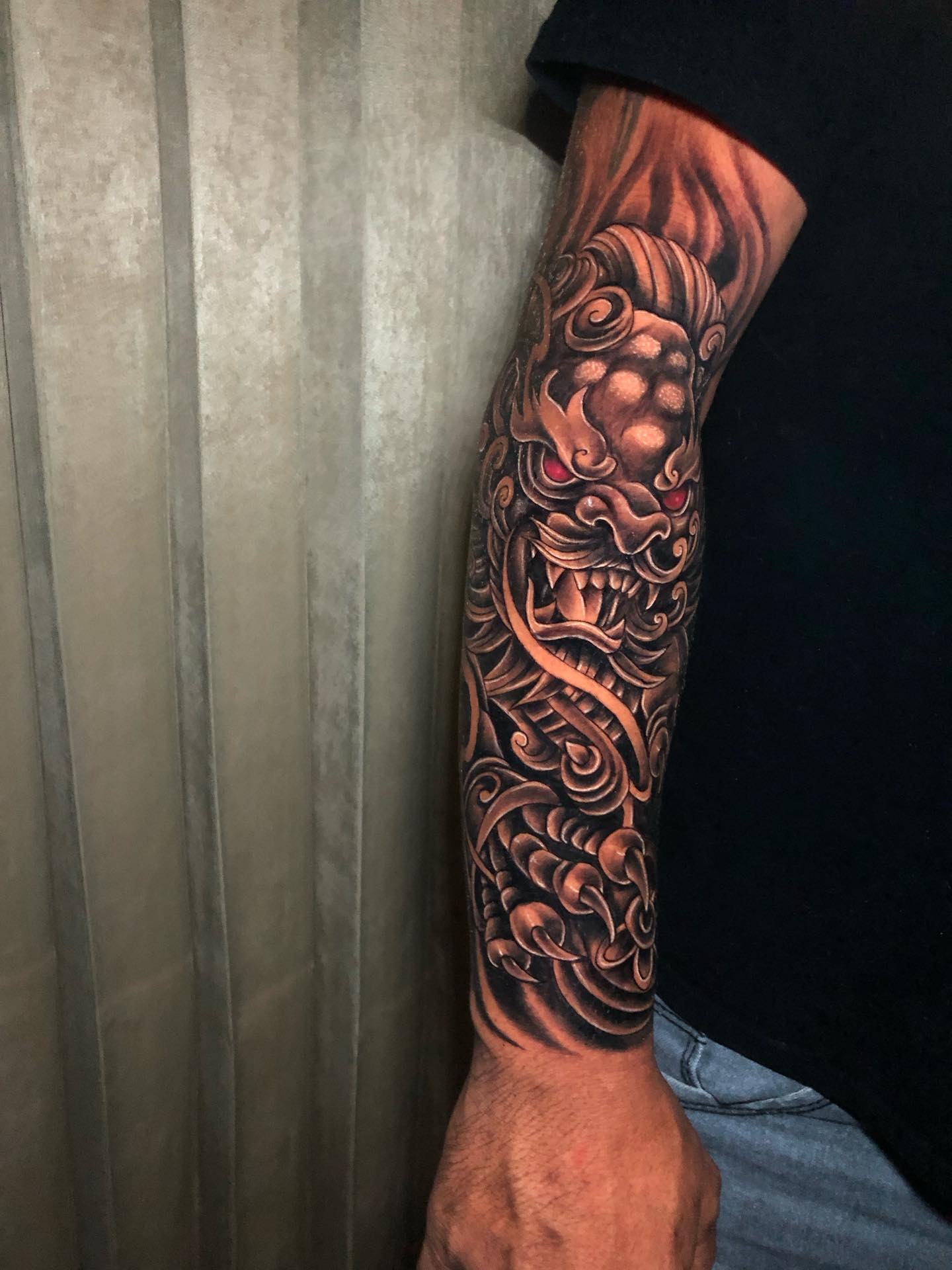
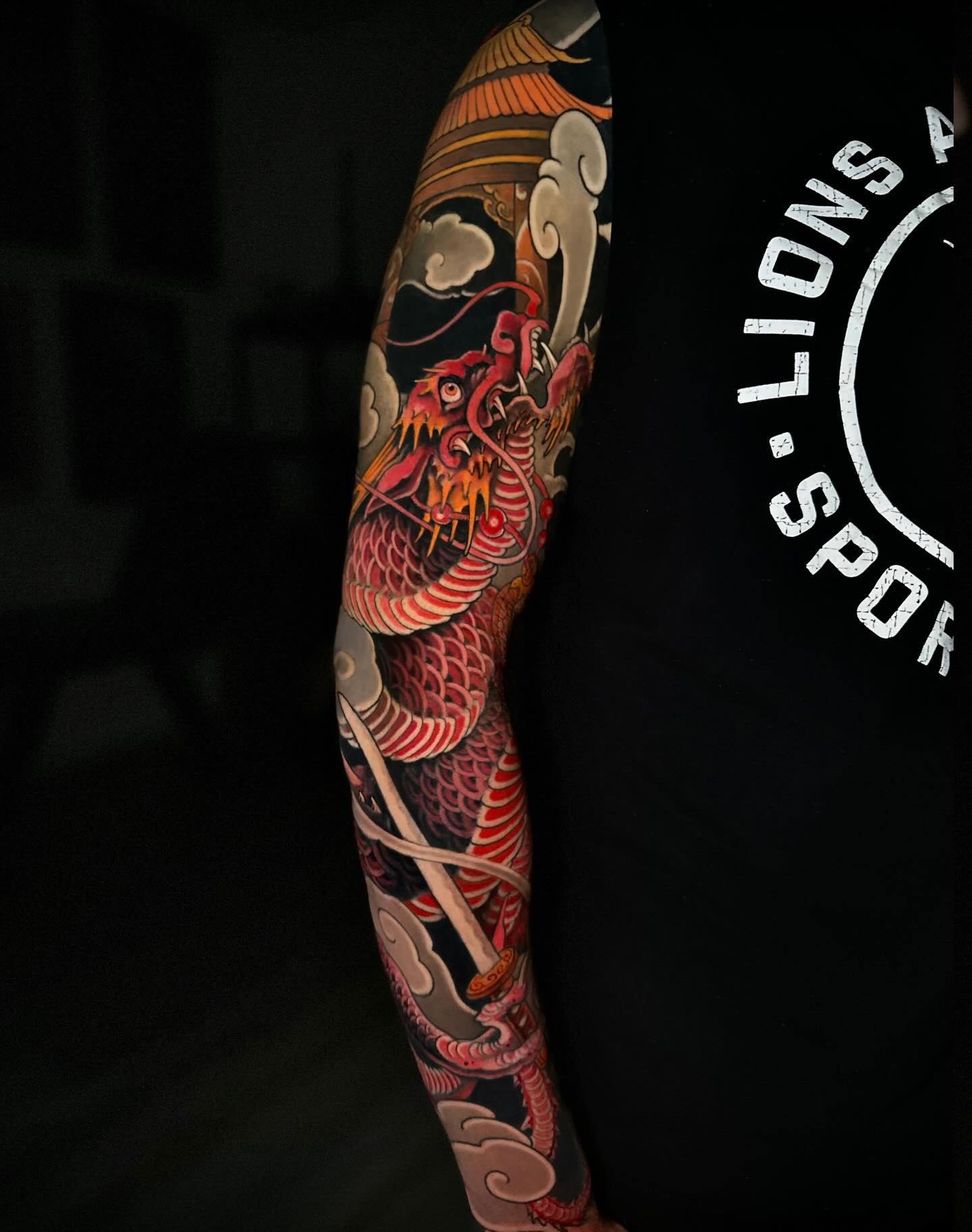
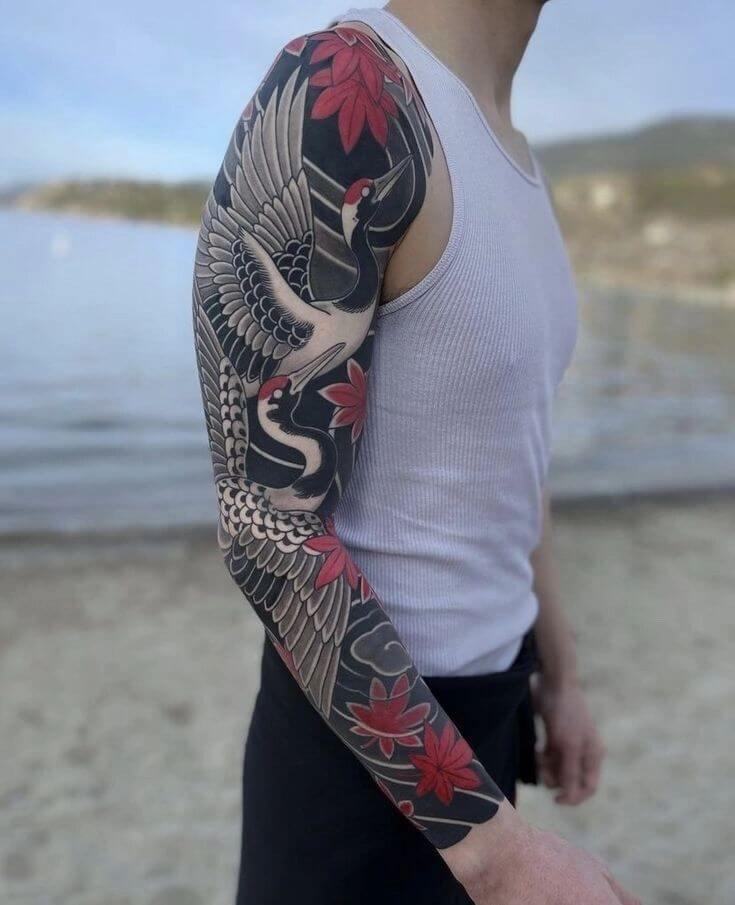
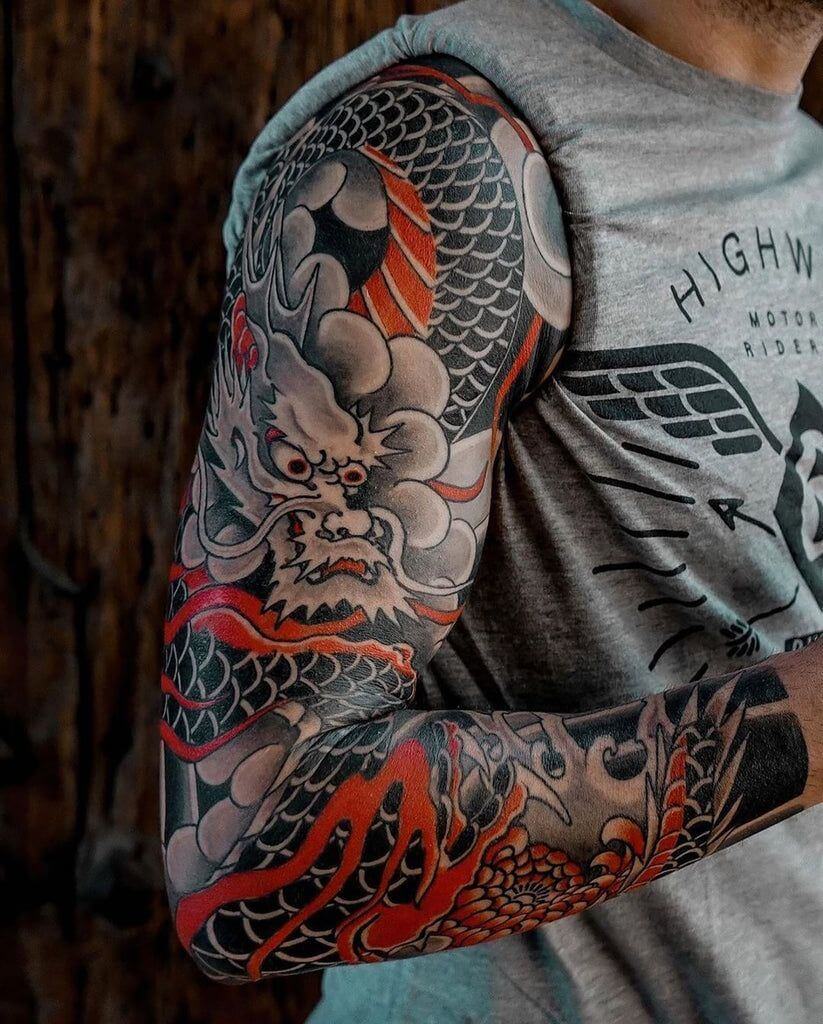
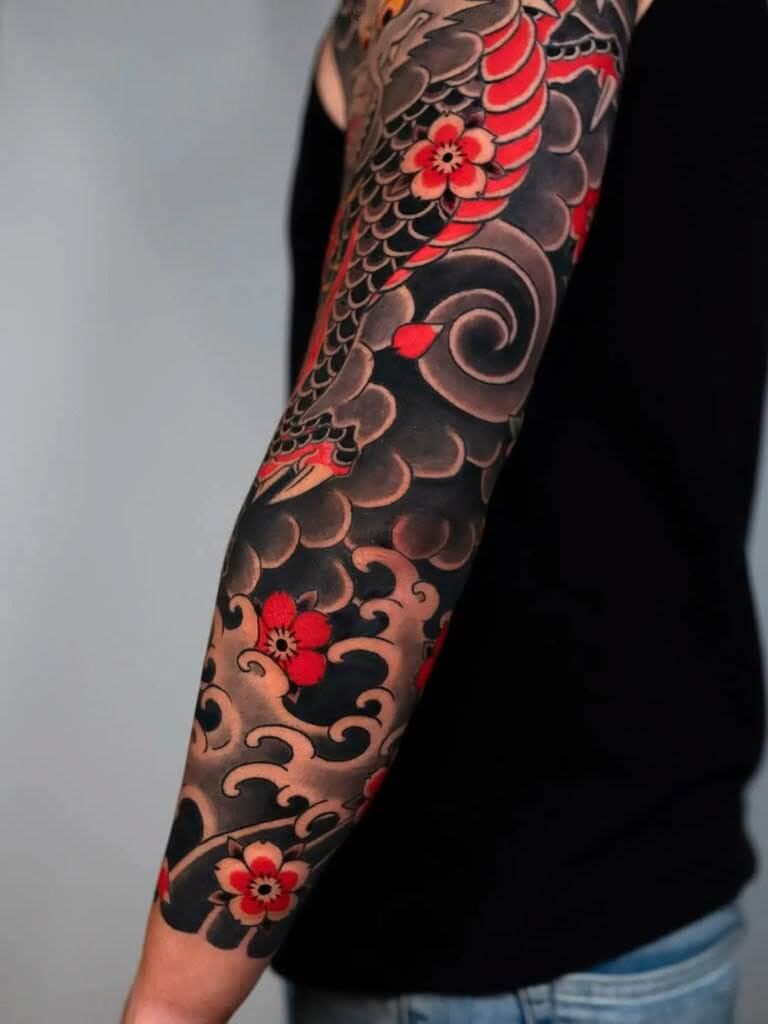
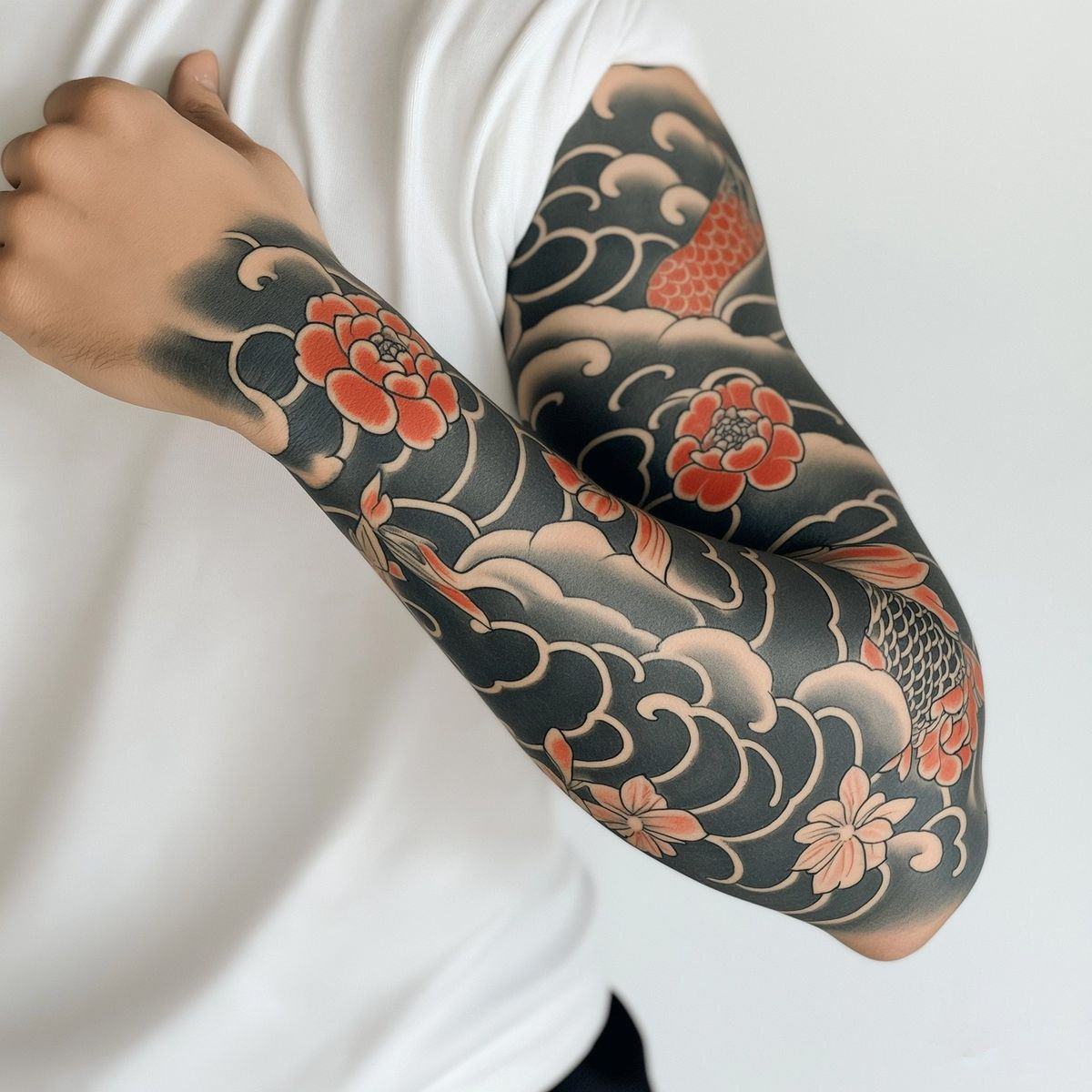
The main Yakuza tattoo meanings appear through traditional motifs. A dragon may suggest power and wisdom, while a koi fish is often linked with persistence and movement through obstacles. Sakura flowers remind us of the shortness of life, and samurai figures are connected with duty, honor and self-control.
The same scene feels very different on the back, sleeve, chest or leg. Color, scale, background and empty space all influence how the final artwork is read.


Key Yakuza Symbols and Their Interpretation
Yakuza symbols are chosen not only for their visual strength, but also for the ideas they bring into the scene.
In Japanese tattooing, the background and movement are just as important as the central figure.
Common elements include:
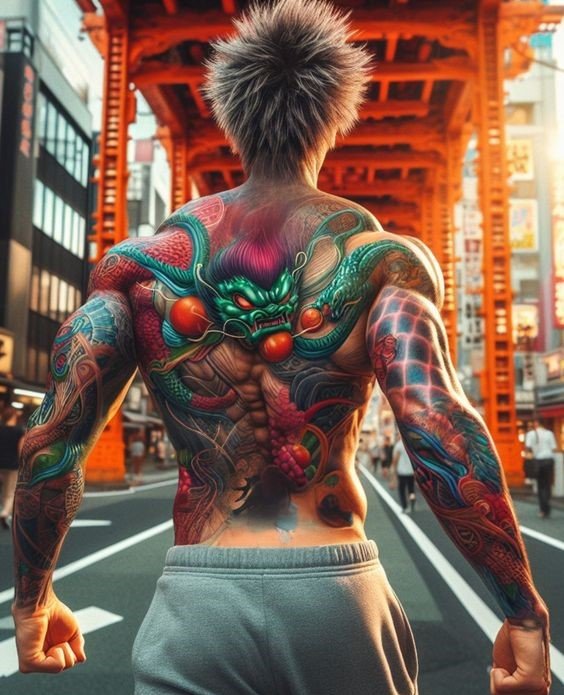
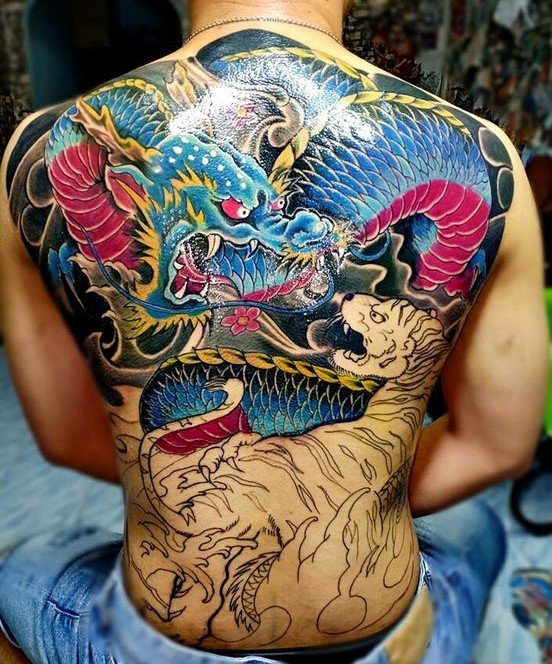
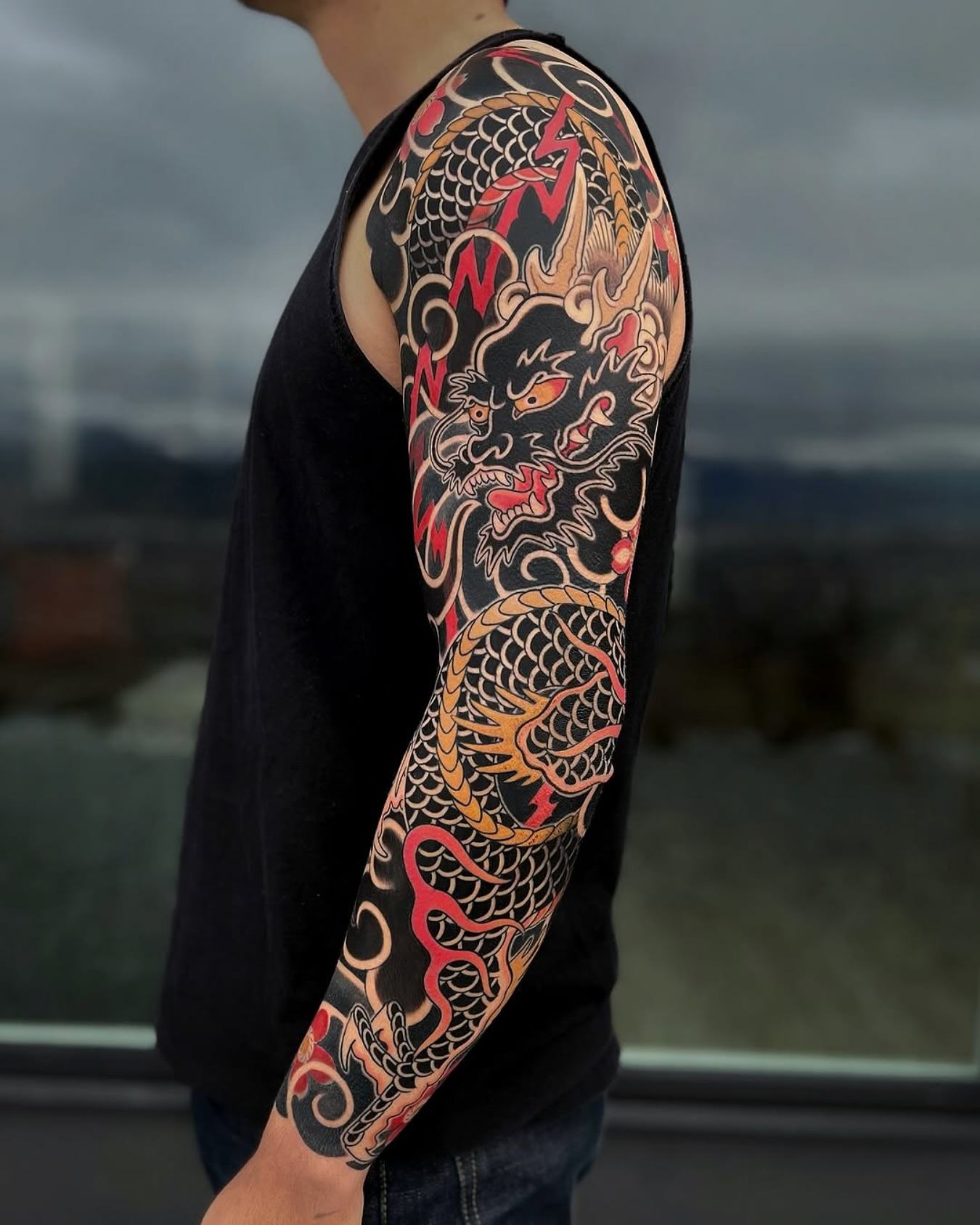
- Dragon - power, wisdom, protection and good fortune
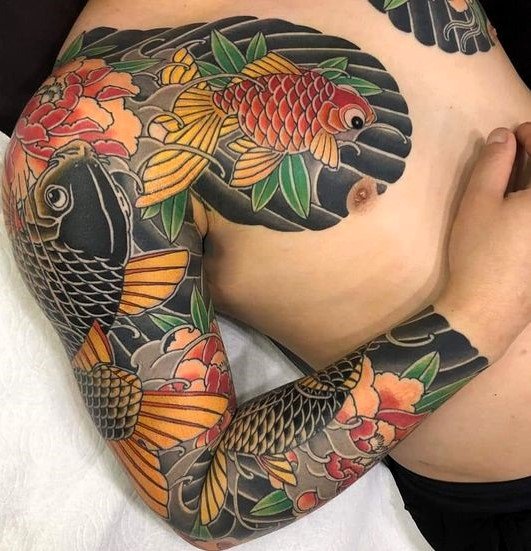
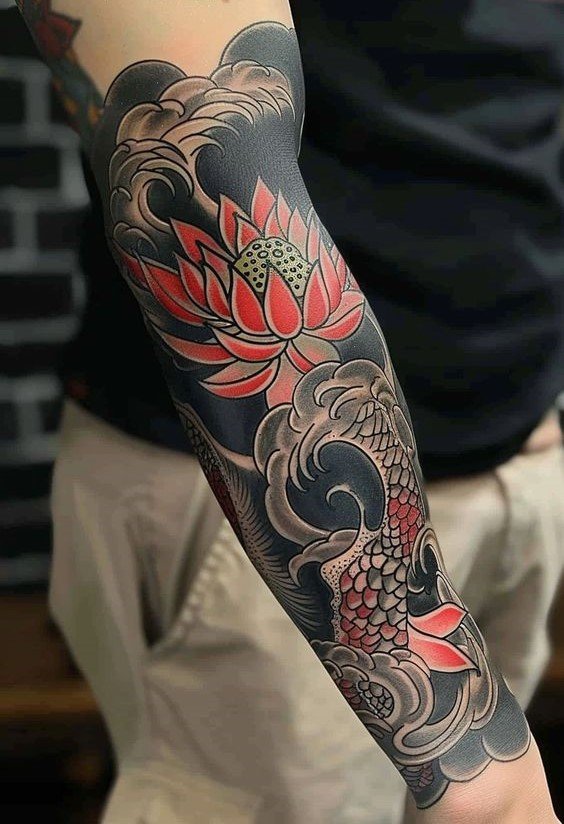
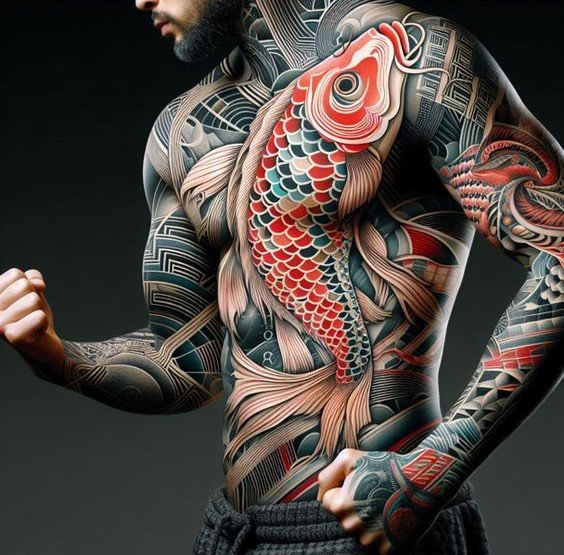
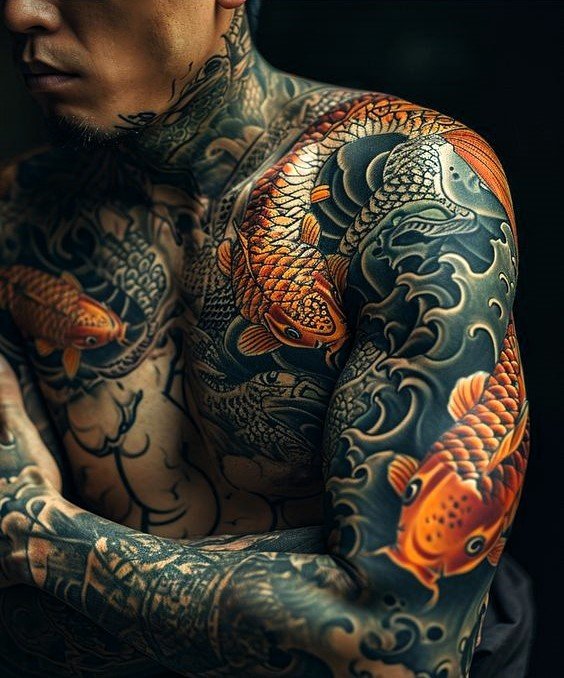
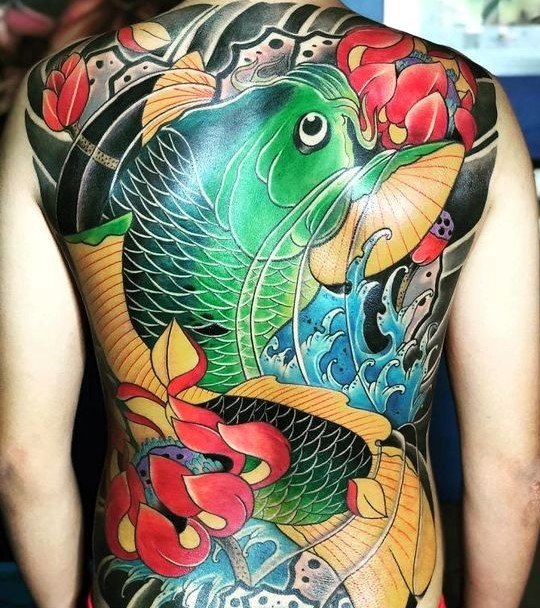
- Koi carp - persistence, change and the ability to overcome obstacles
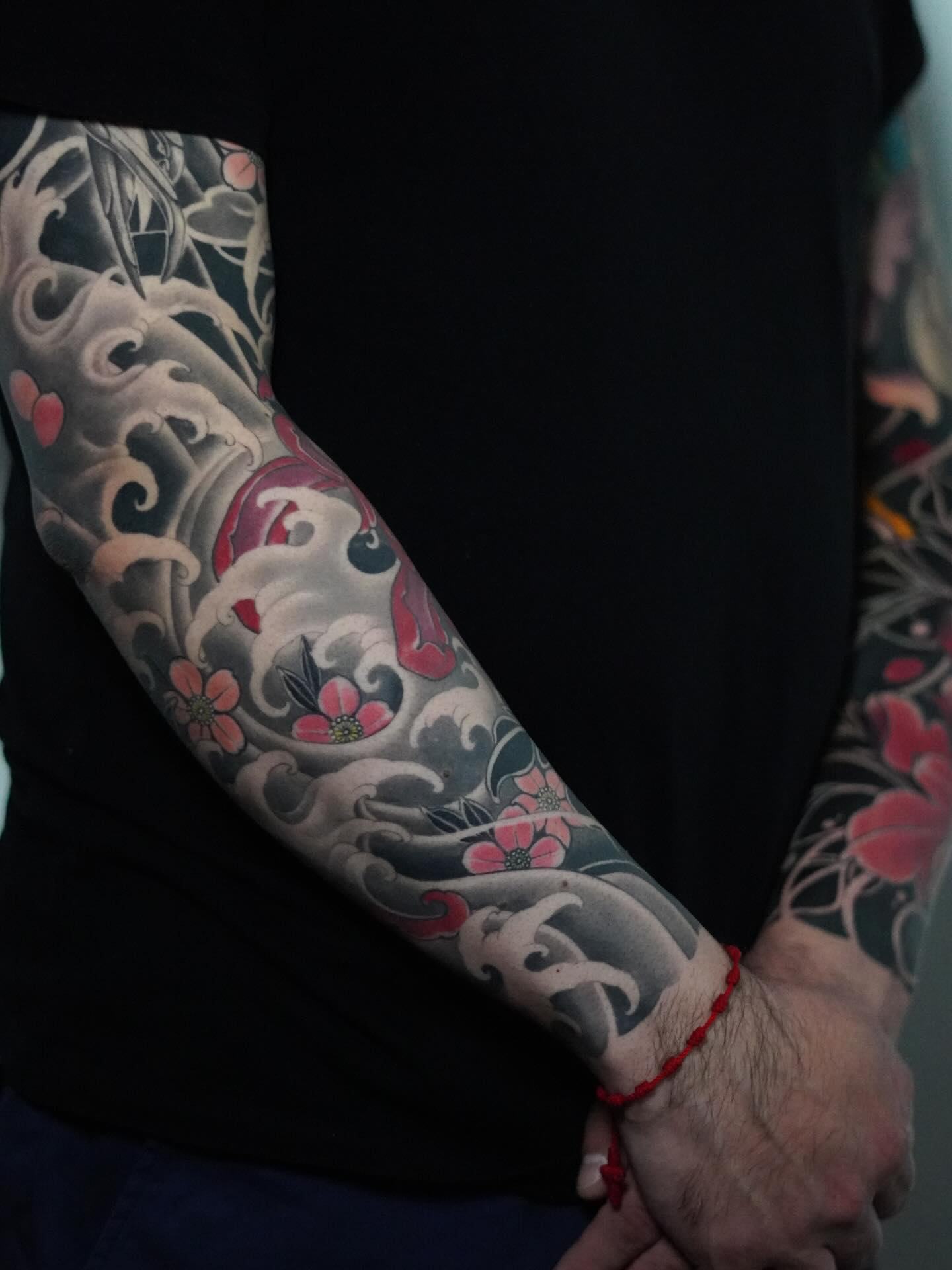
- Sakura flowers - beauty, impermanence and the passing of time
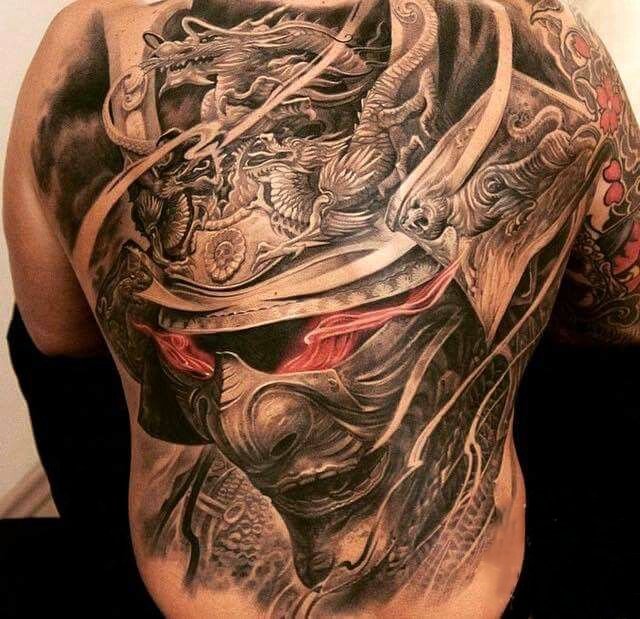
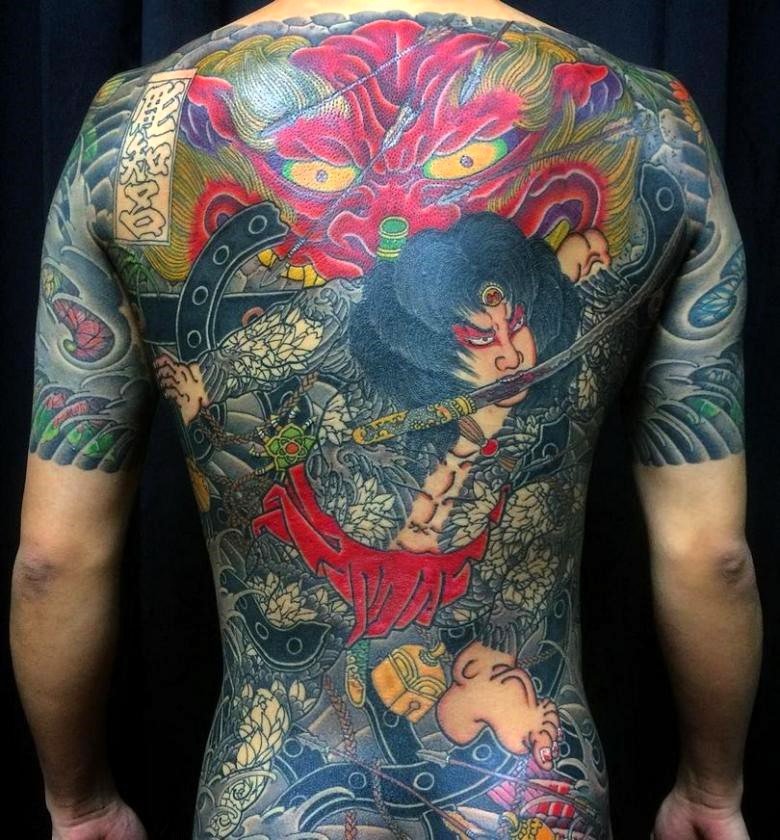
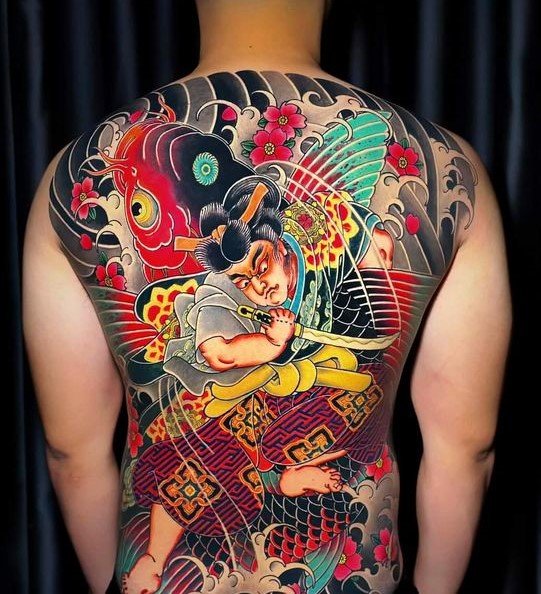
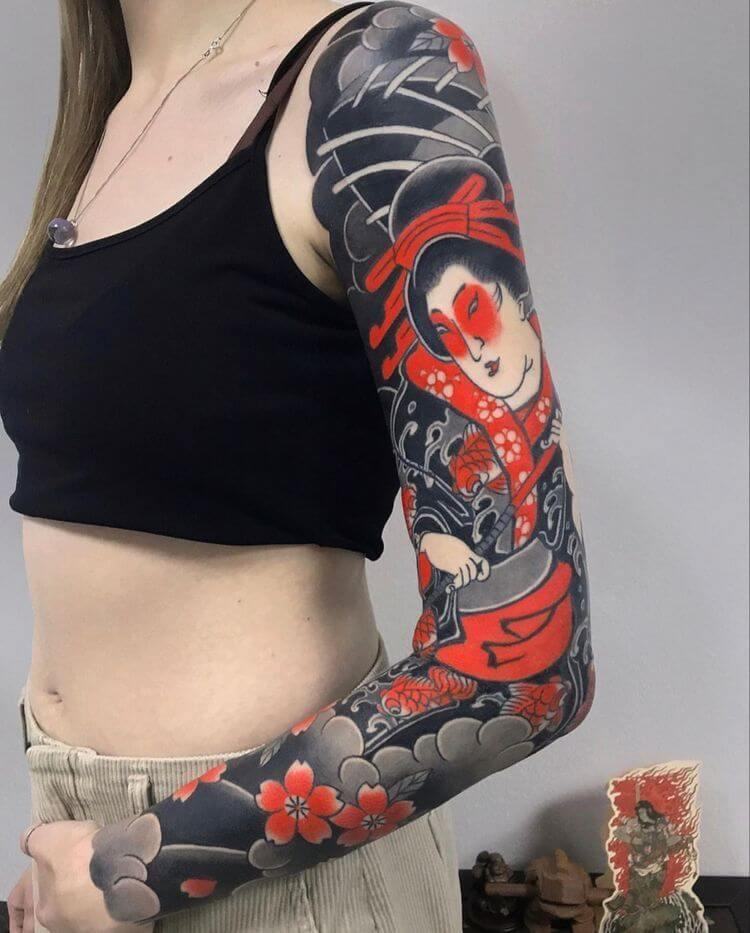
- Samurai - discipline, duty, honor and loyalty
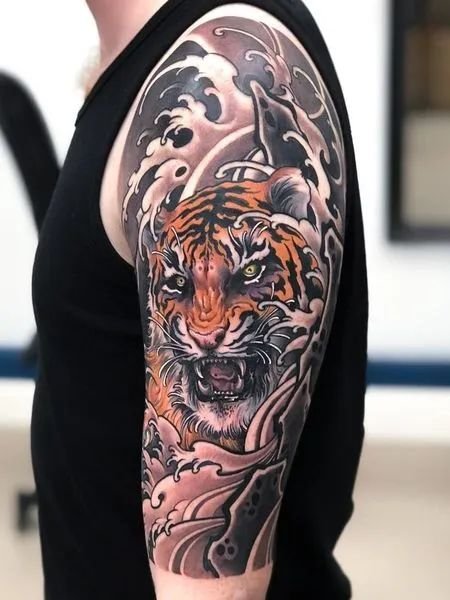
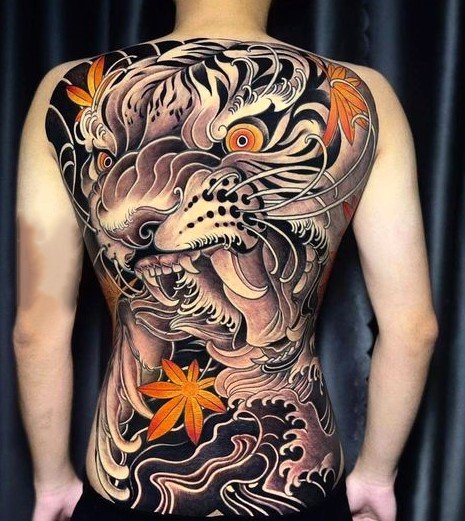
- Tiger - courage, strength and protection from negative forces
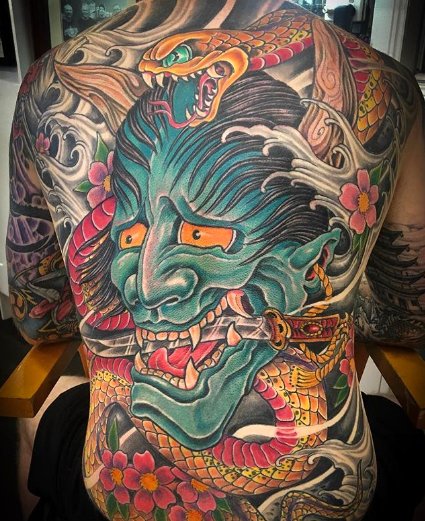
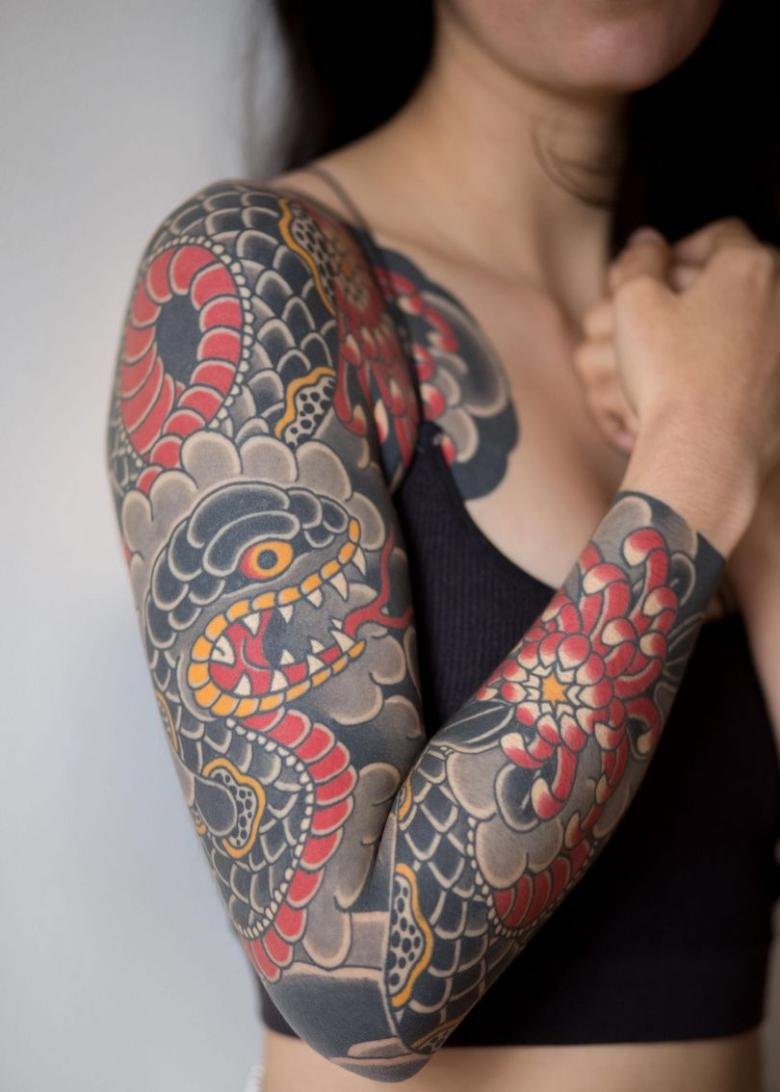
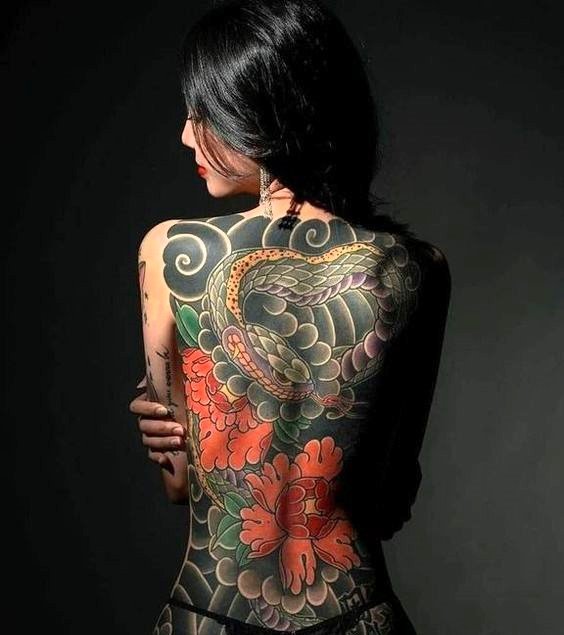
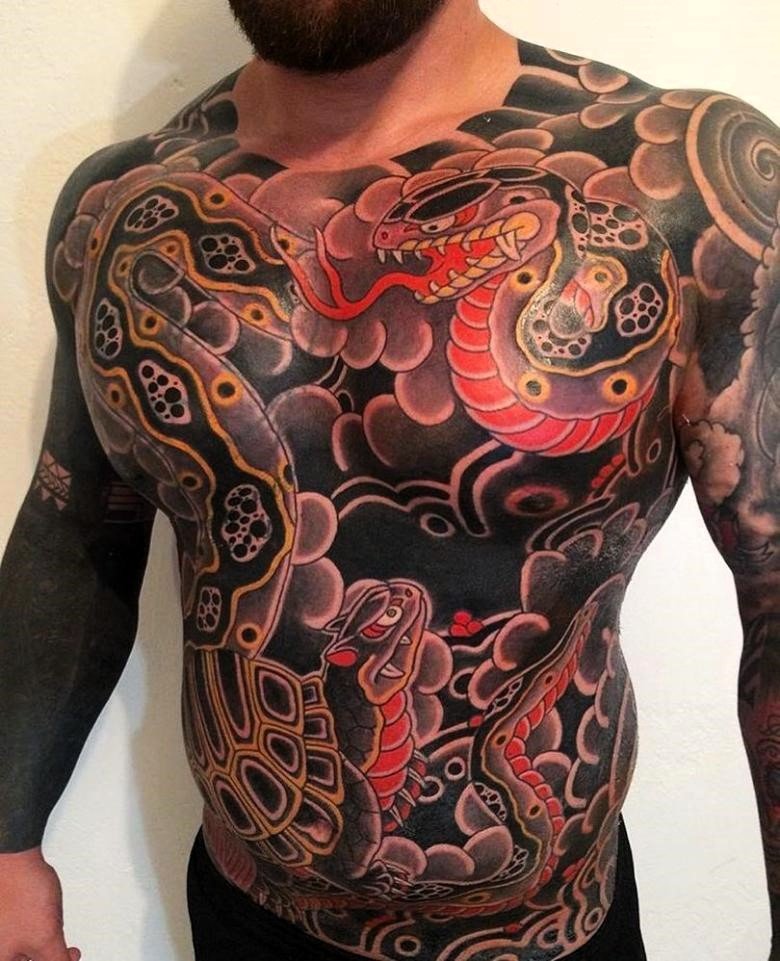
- Snake - renewal, healing, transformation and hidden danger
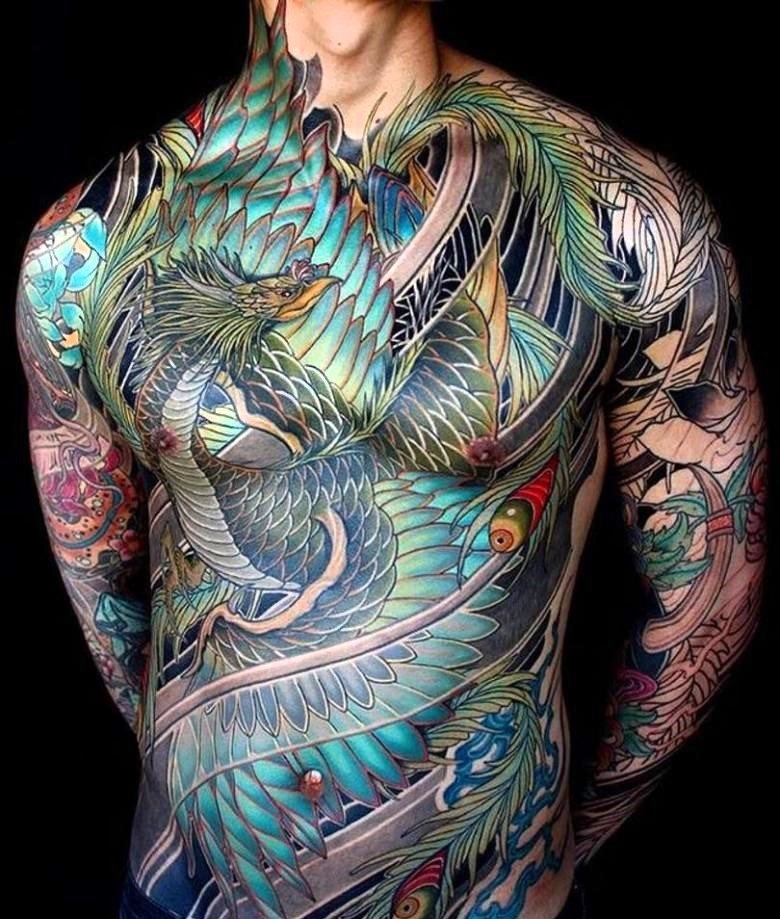
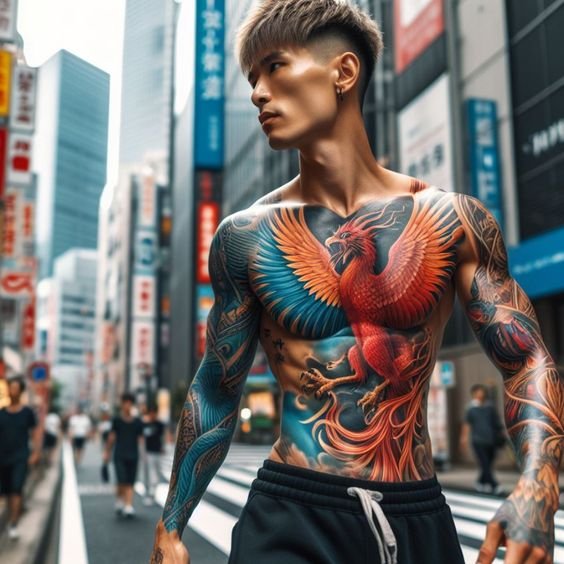
- Phoenix - rebirth, change and a new stage in life
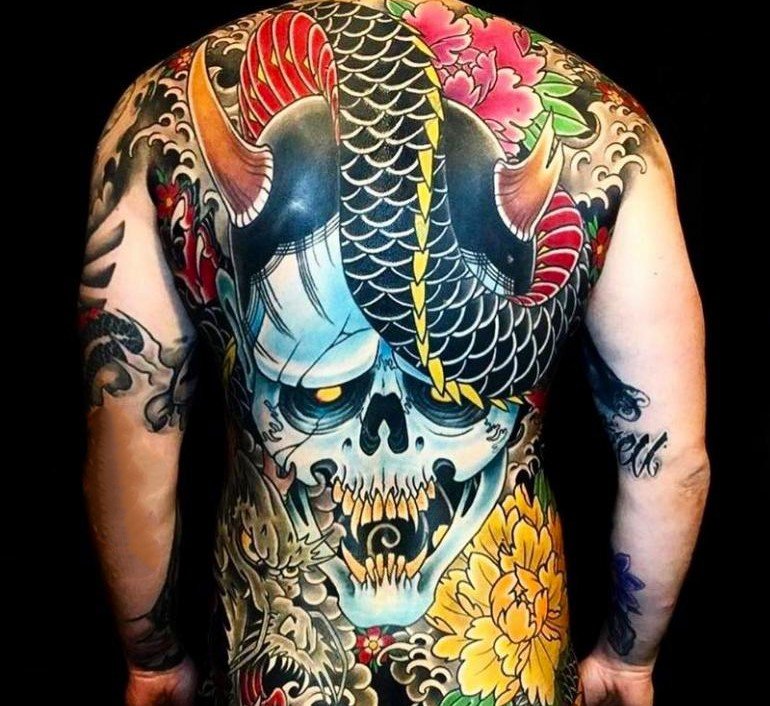
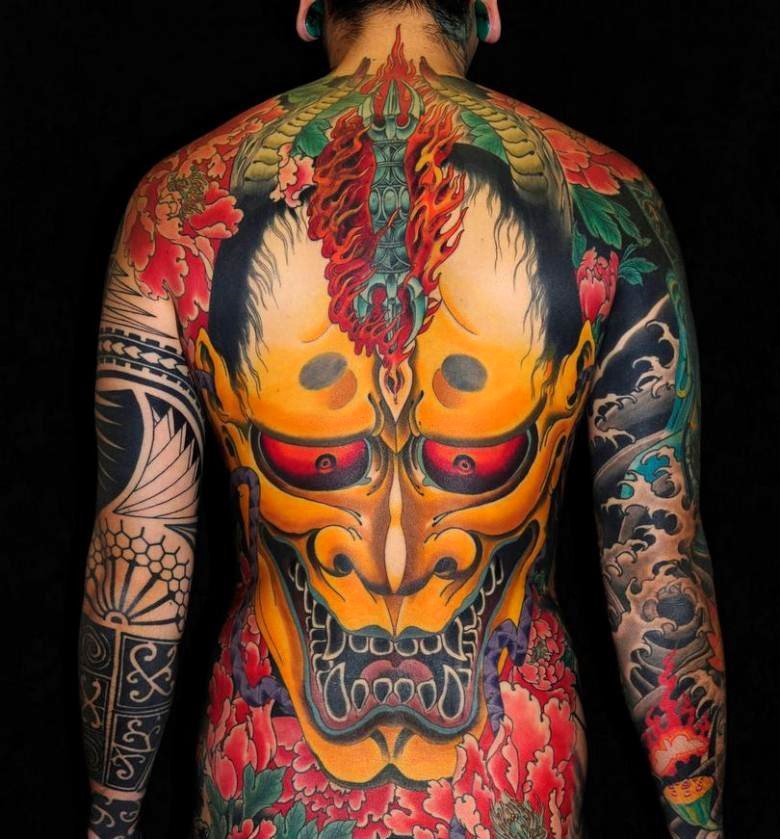
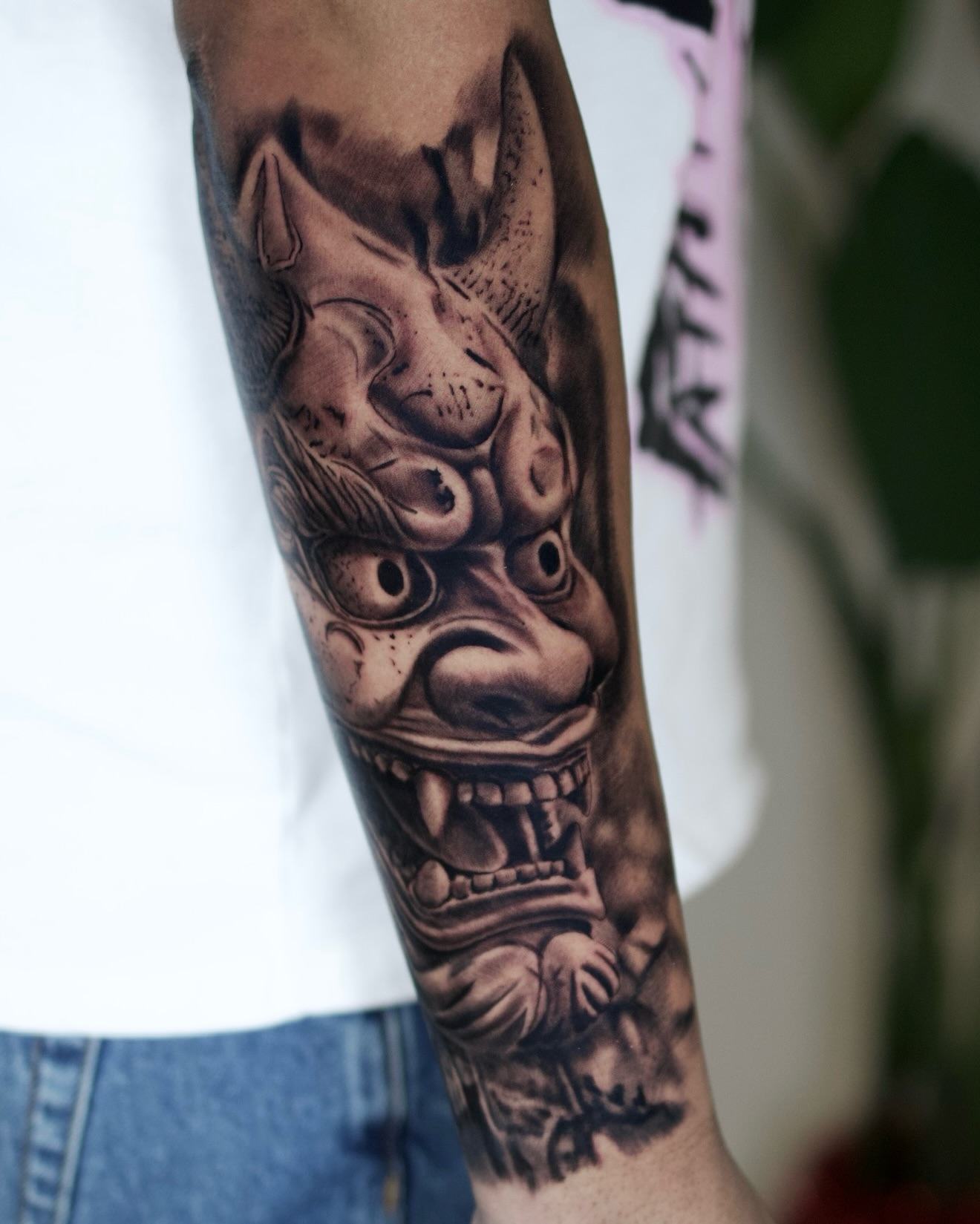
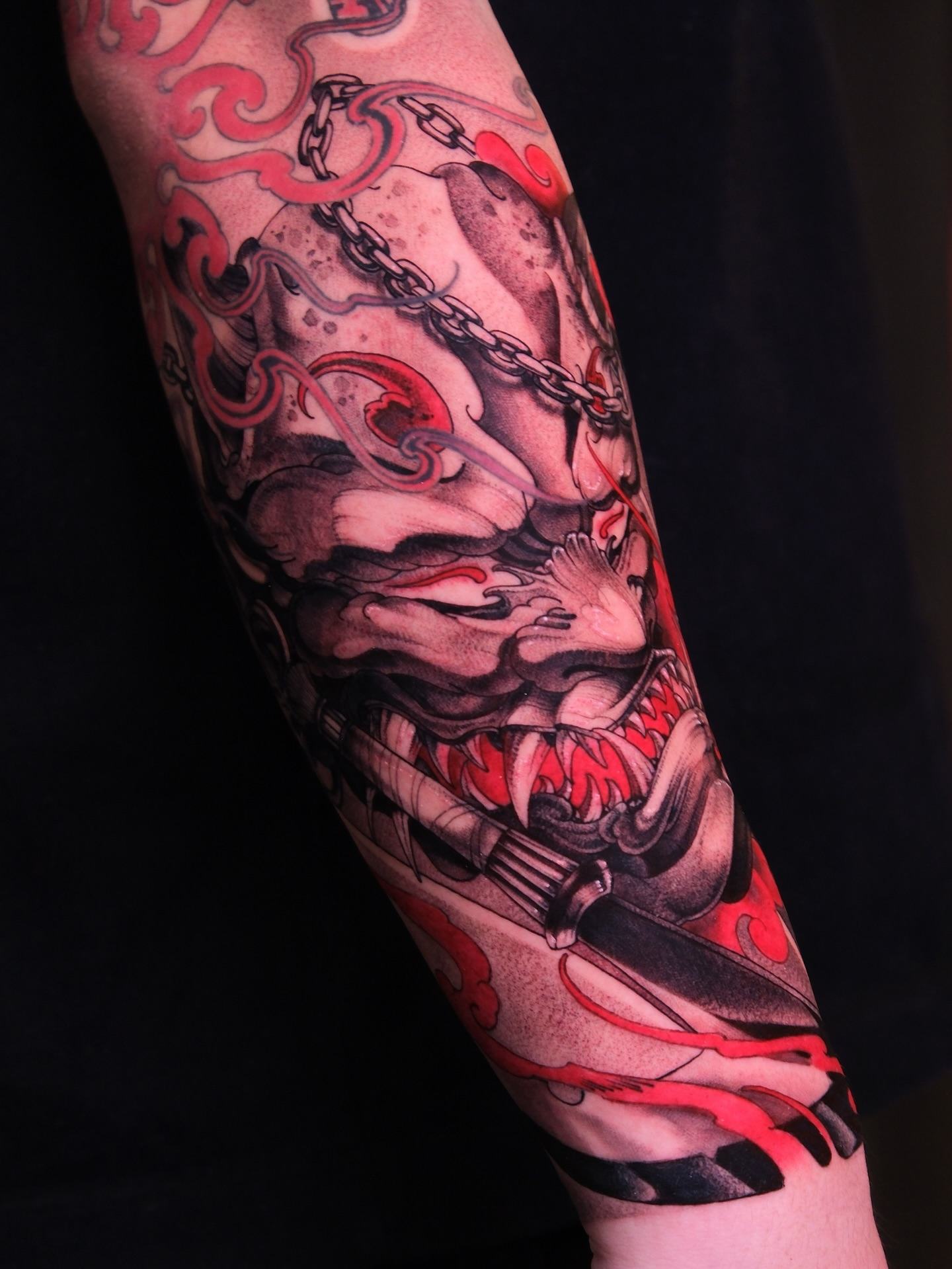
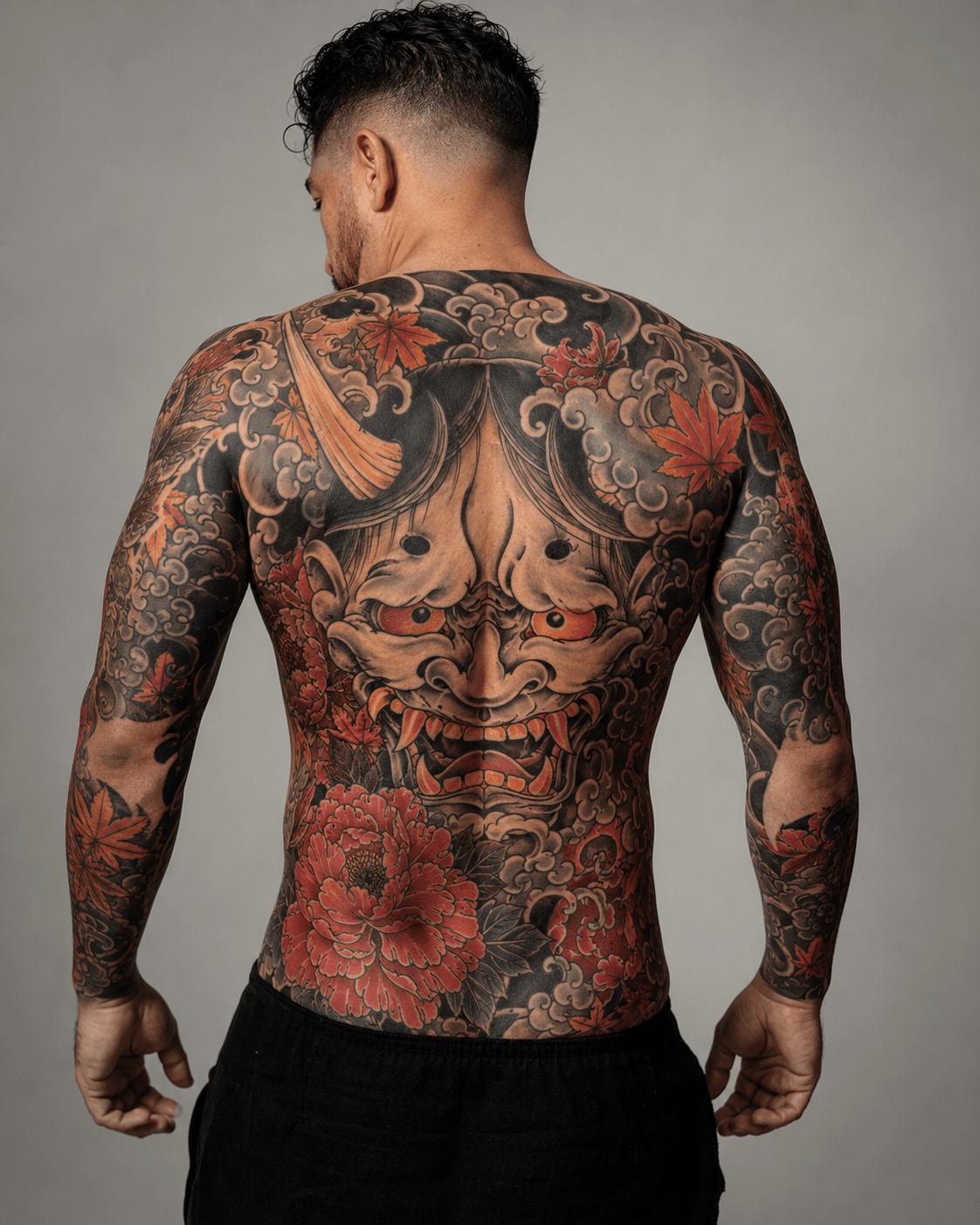
- Hannya or oni mask - strong emotions, conflict, protection and dramatic expression
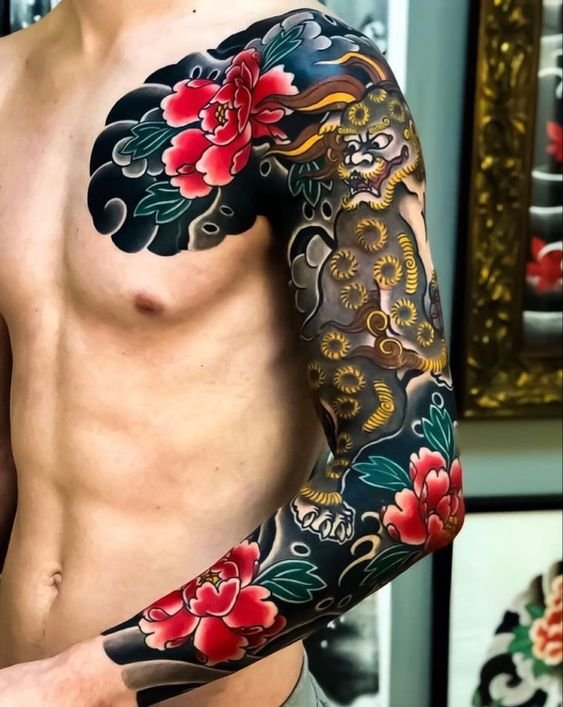
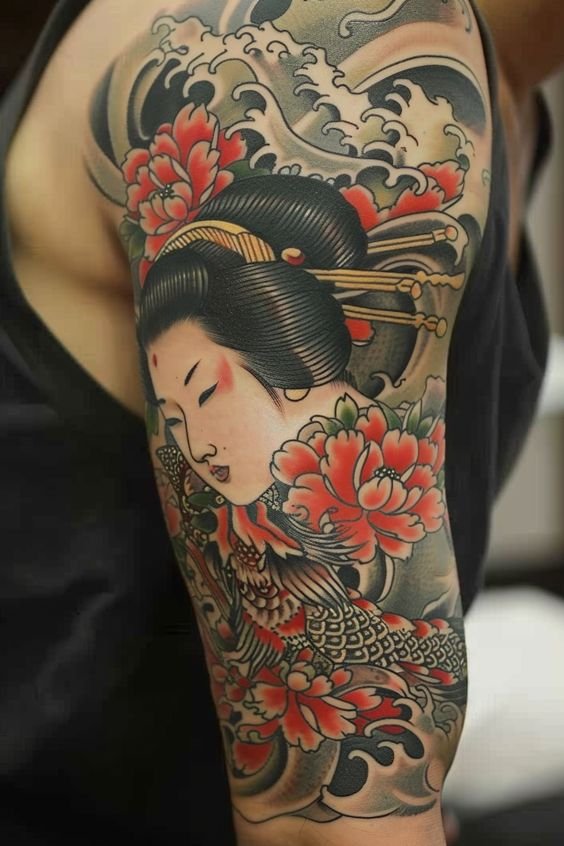
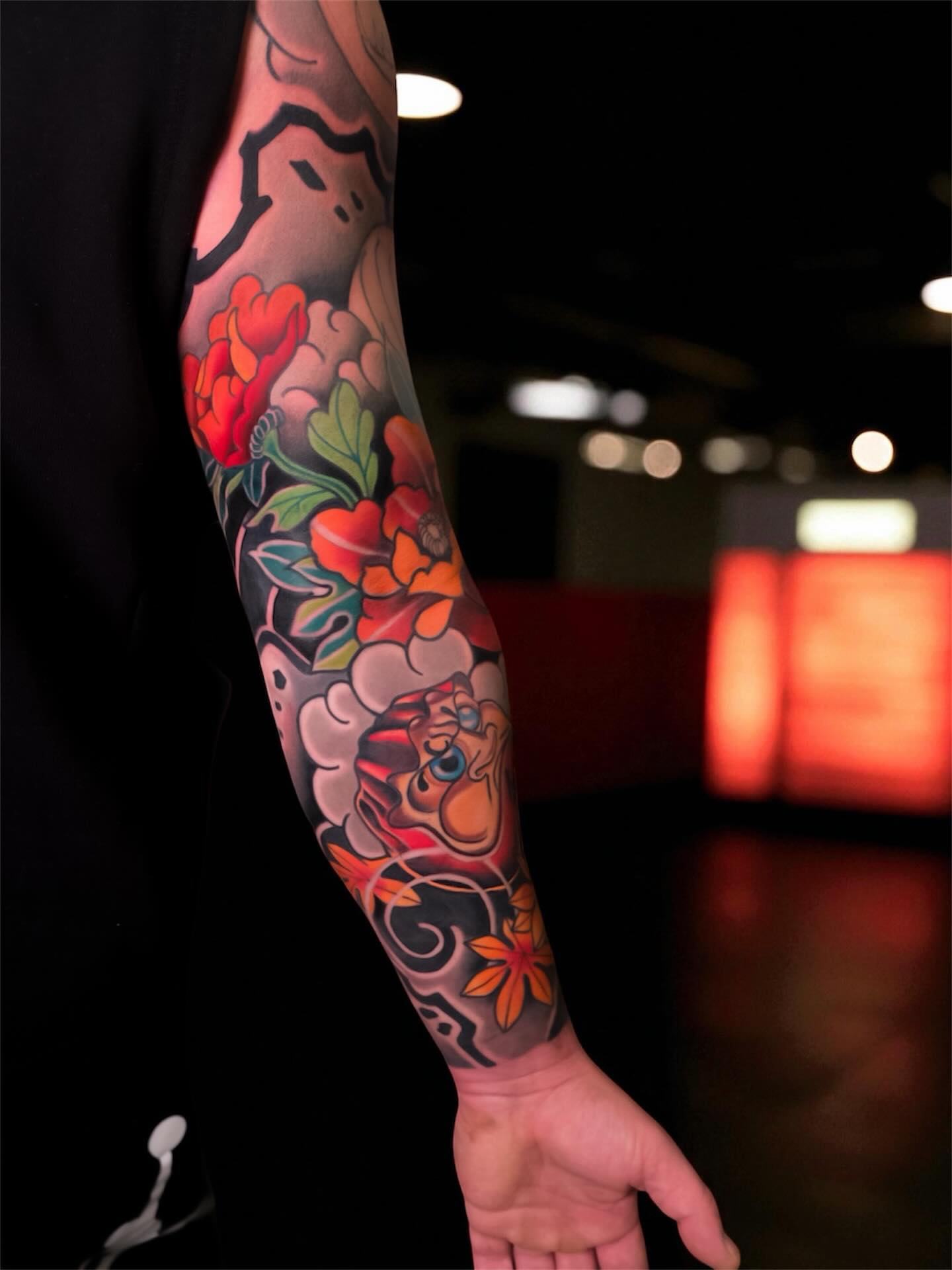
- Peony - elegance, prosperity and contrast with stronger images
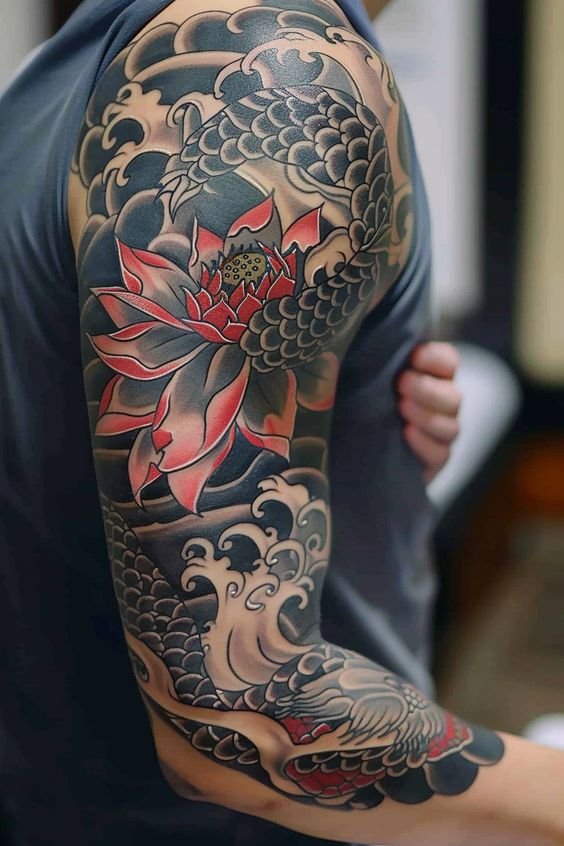
- Waves and clouds - movement, depth and connection between different parts of the artwork
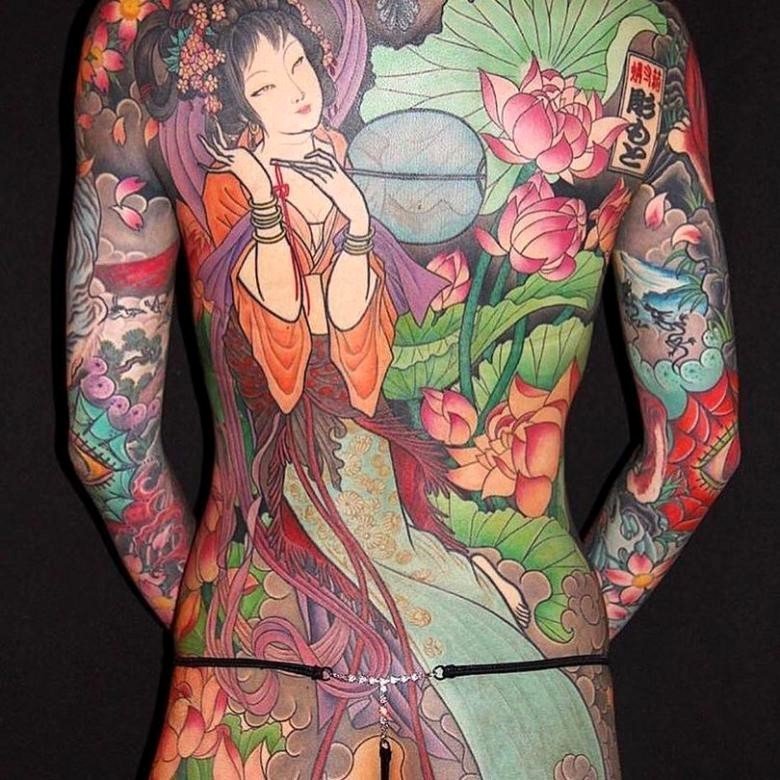
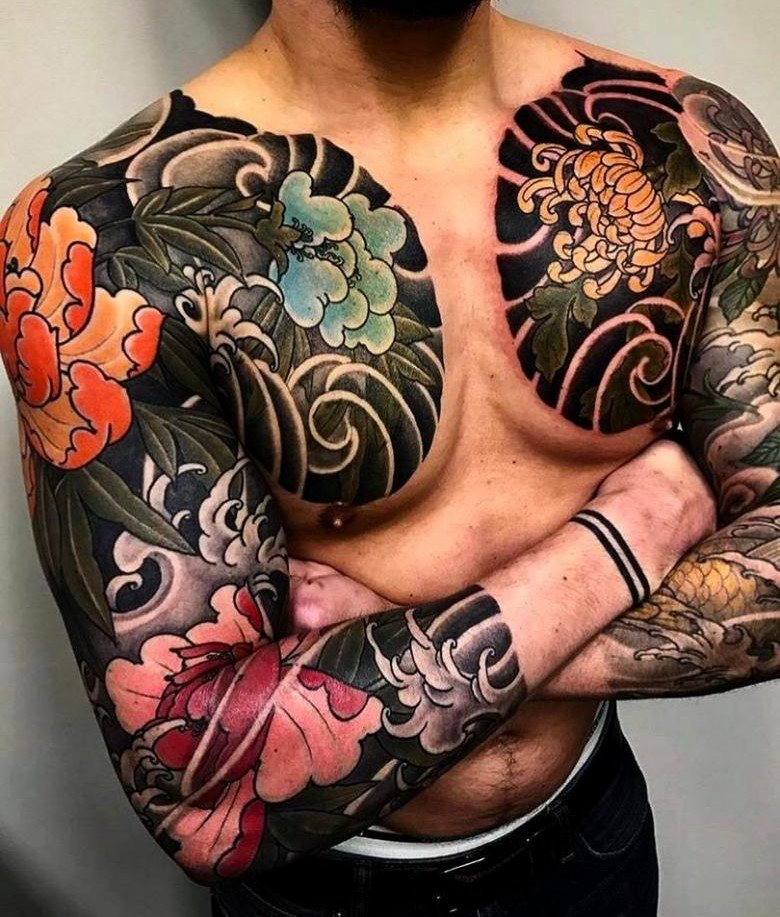
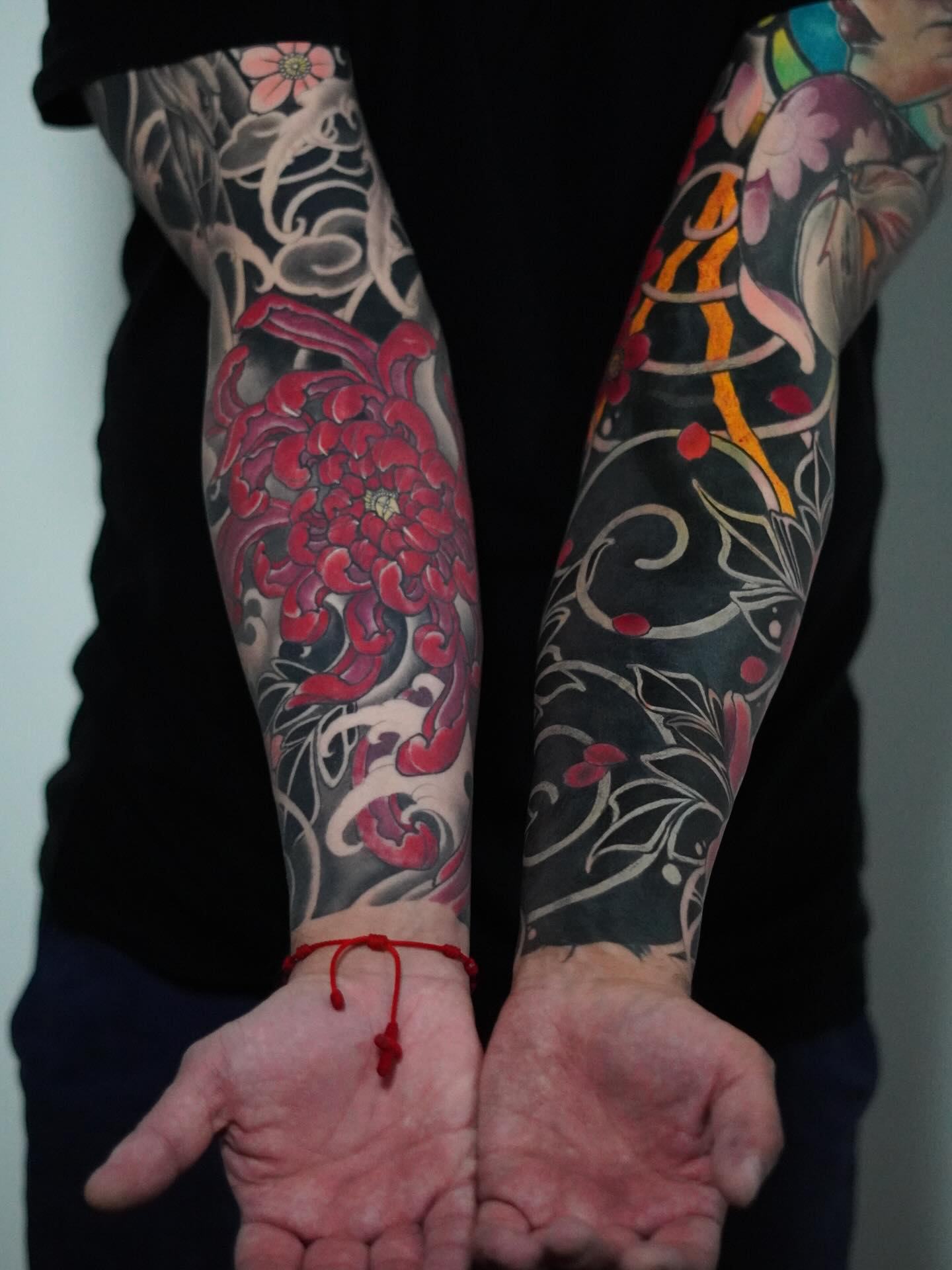
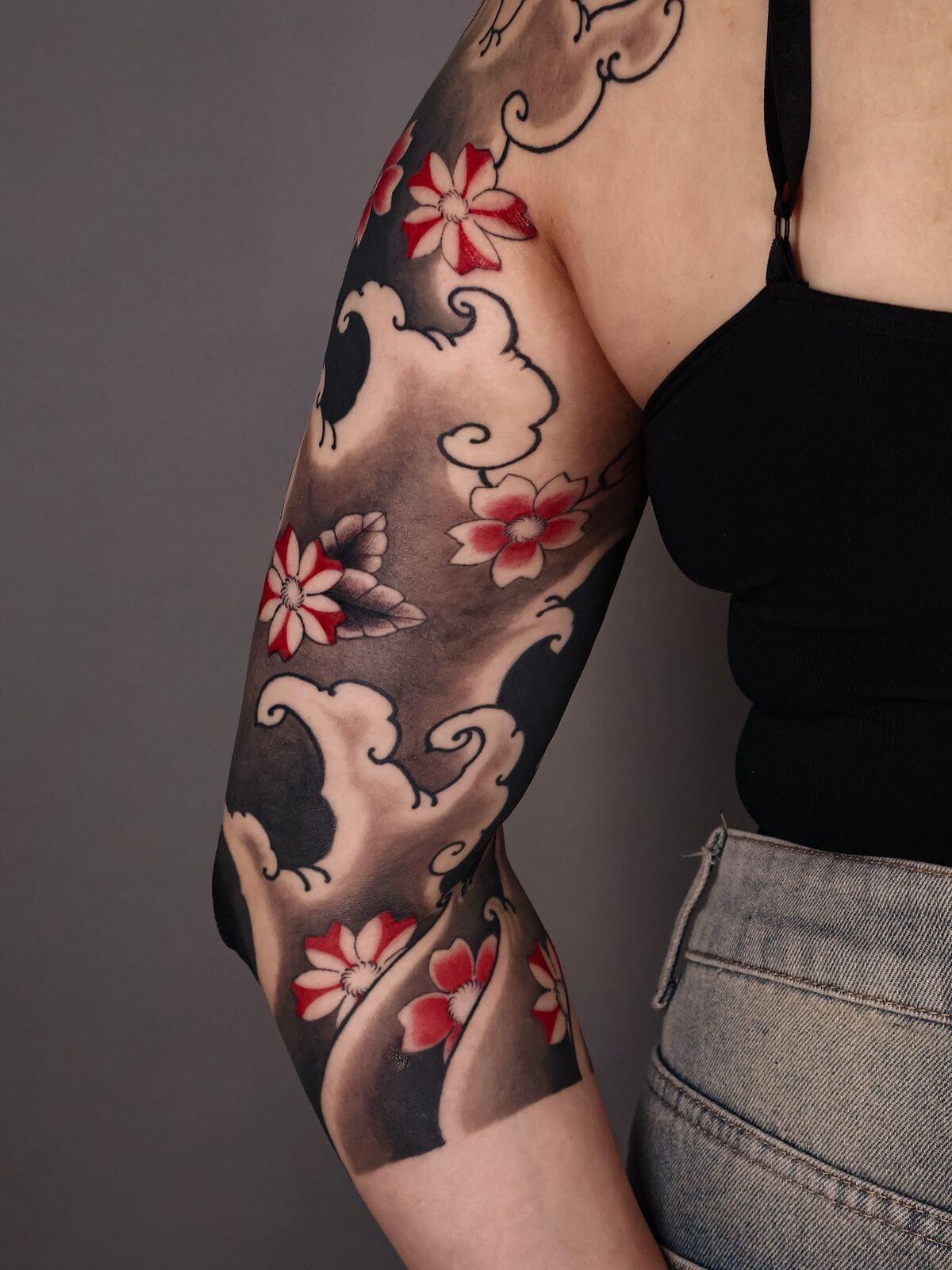
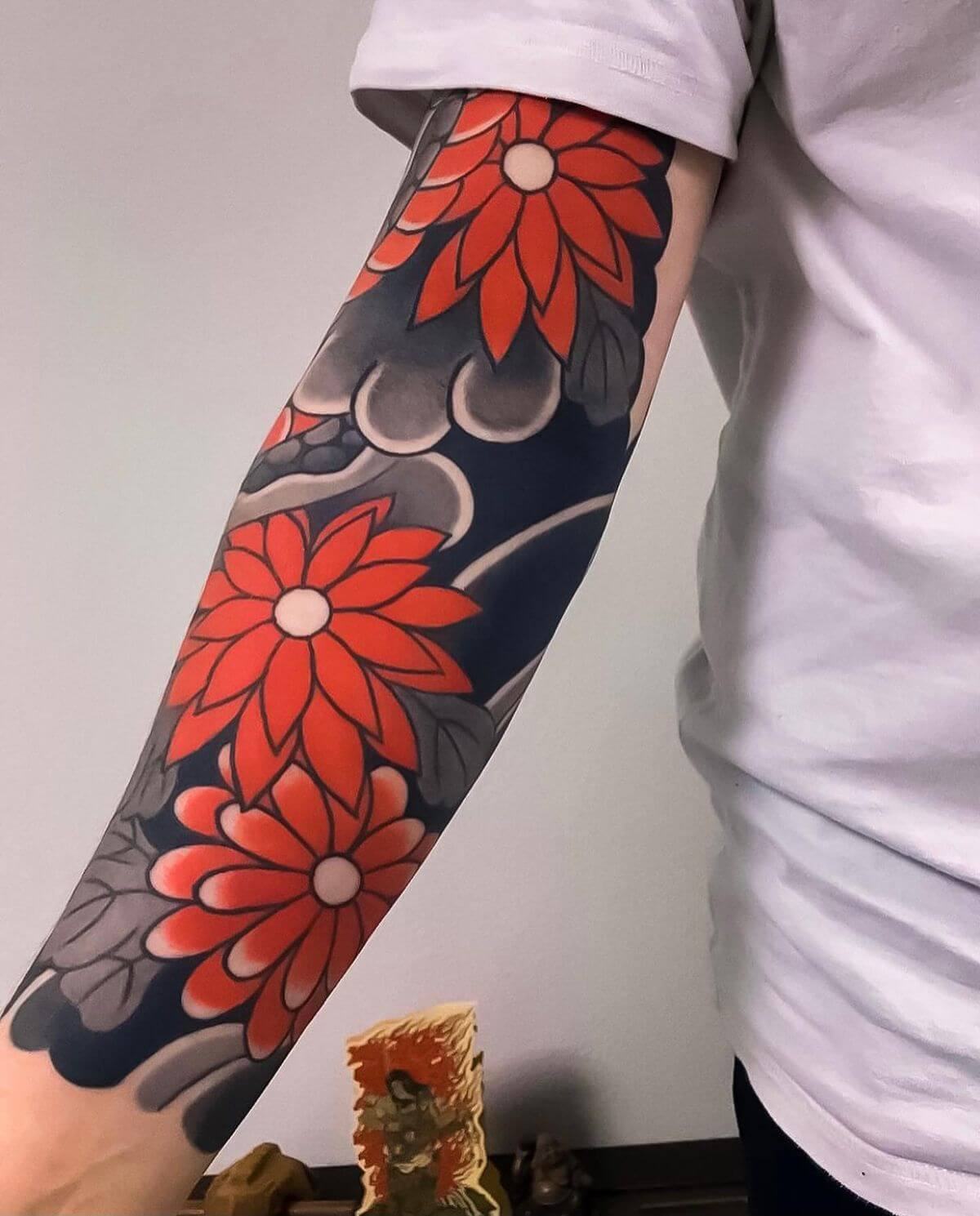
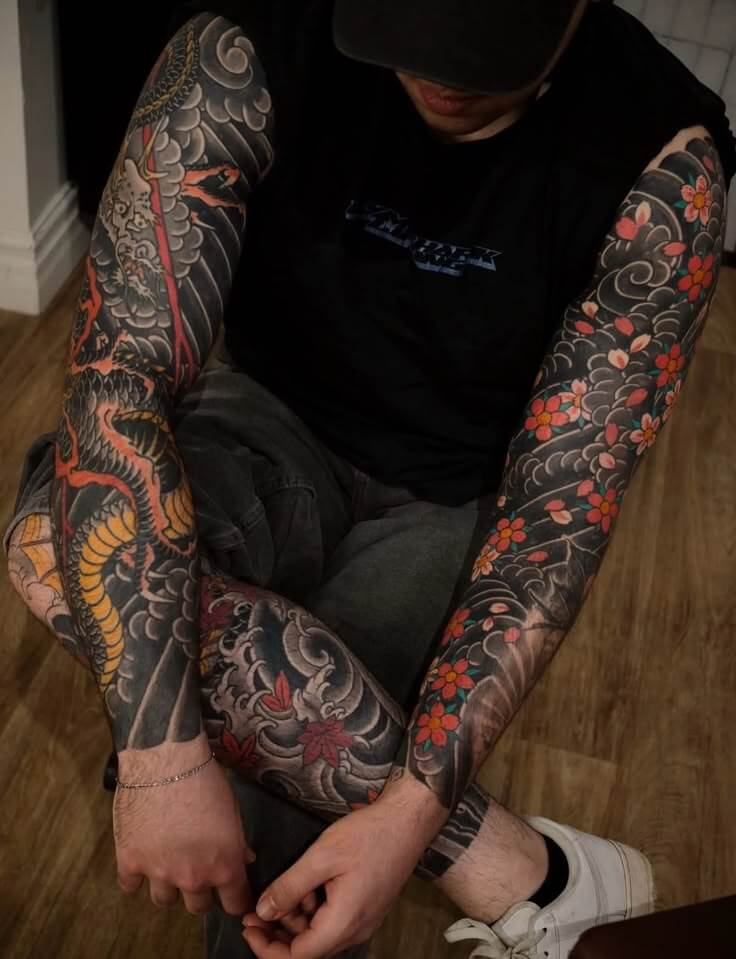
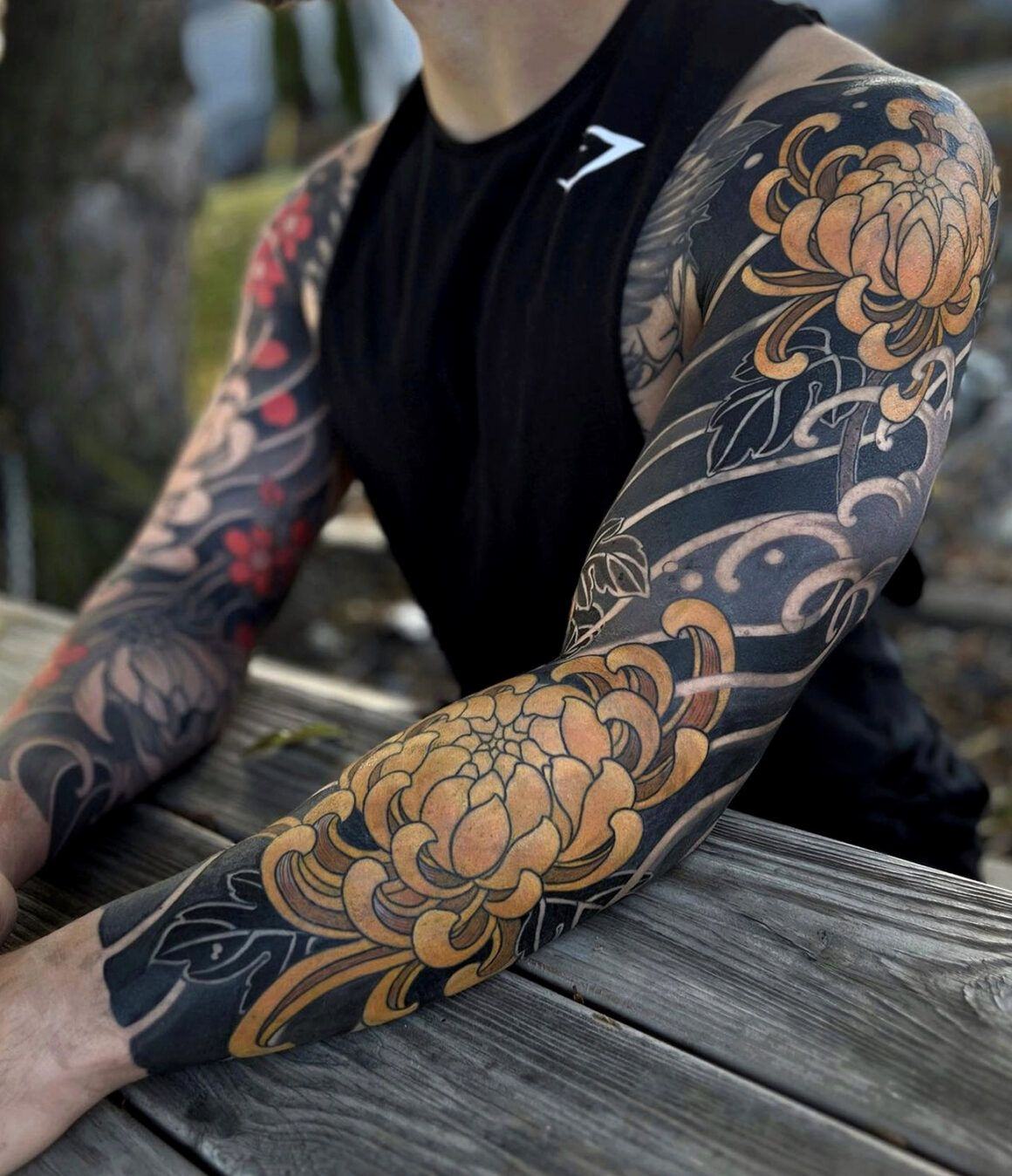
A Yakuza flower tattoo does not have to stand alone. Sakura, peonies and chrysanthemums often soften stronger figures, add rhythm and help the scene feel balanced. They work with dragons, koi, snakes, samurai or masks without making the result look overloaded.


Yakuza Back Tattoo: Why the Back Is the Main Placement
The back is one of the most recognizable placements in Japanese tattoo culture.
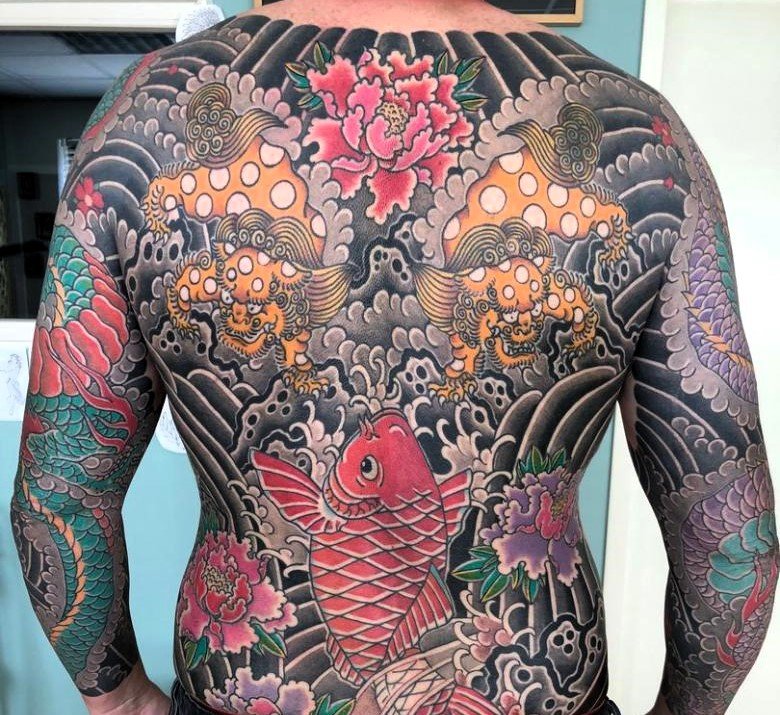
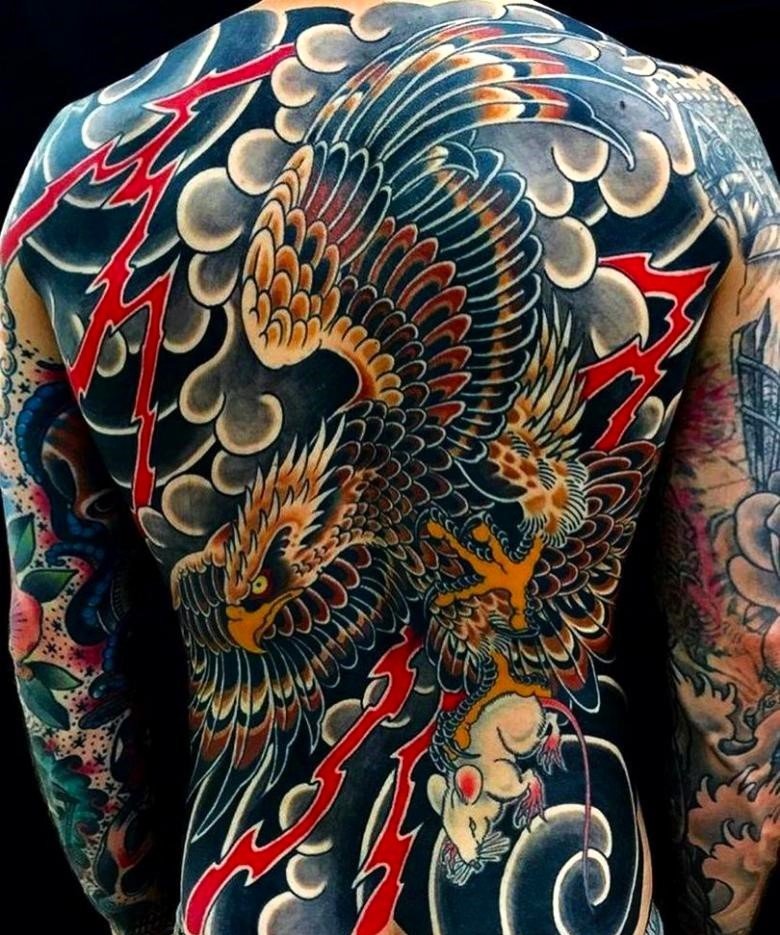
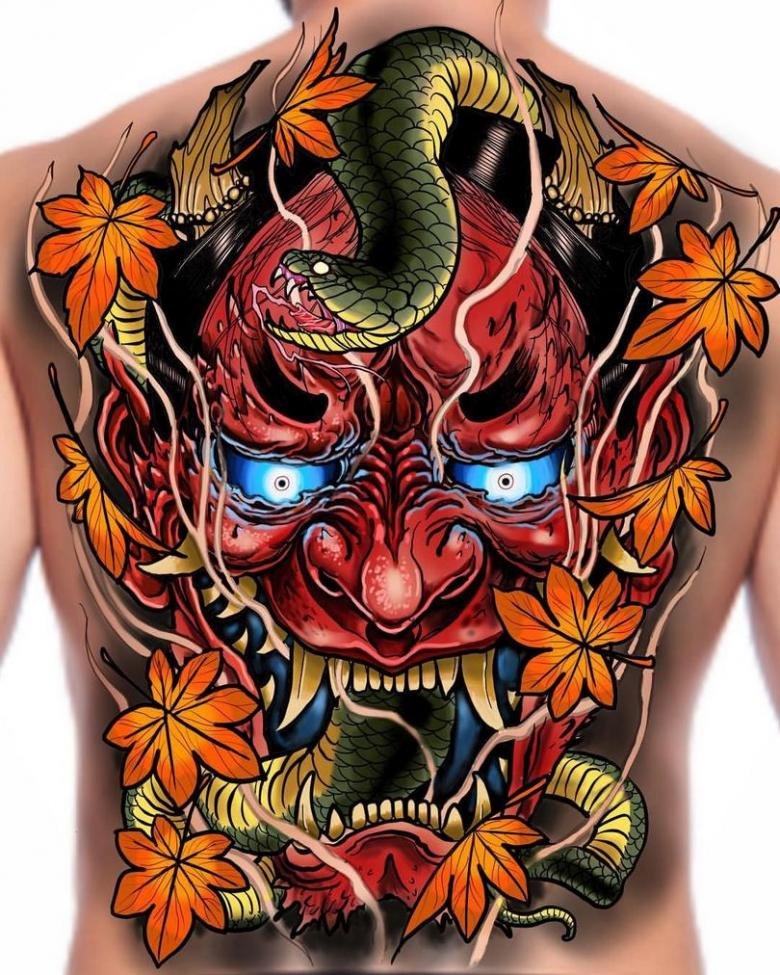
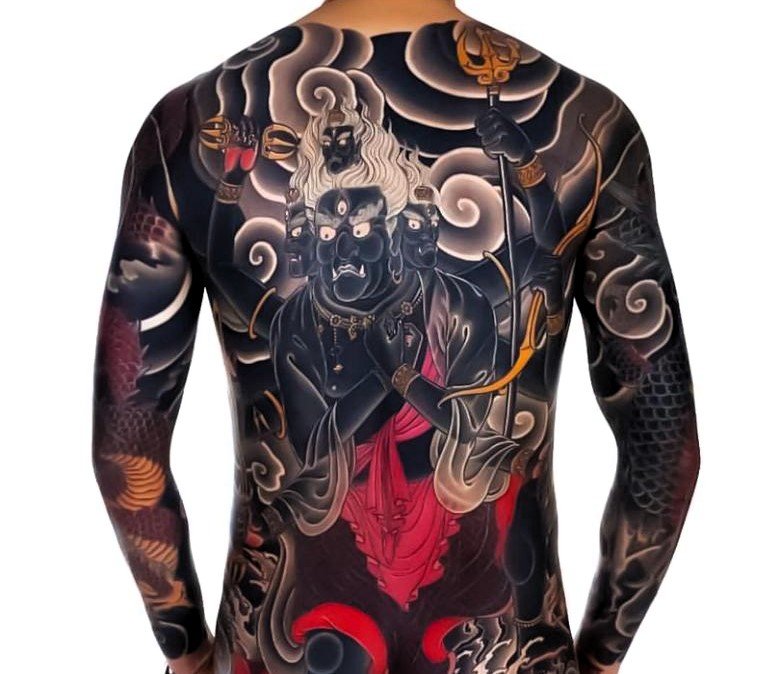
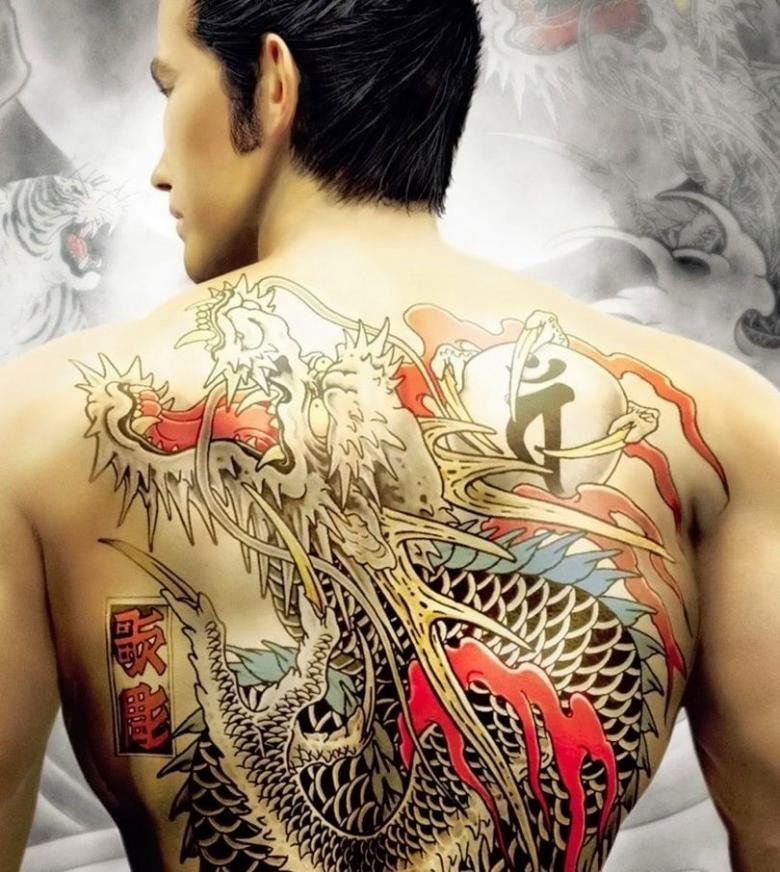
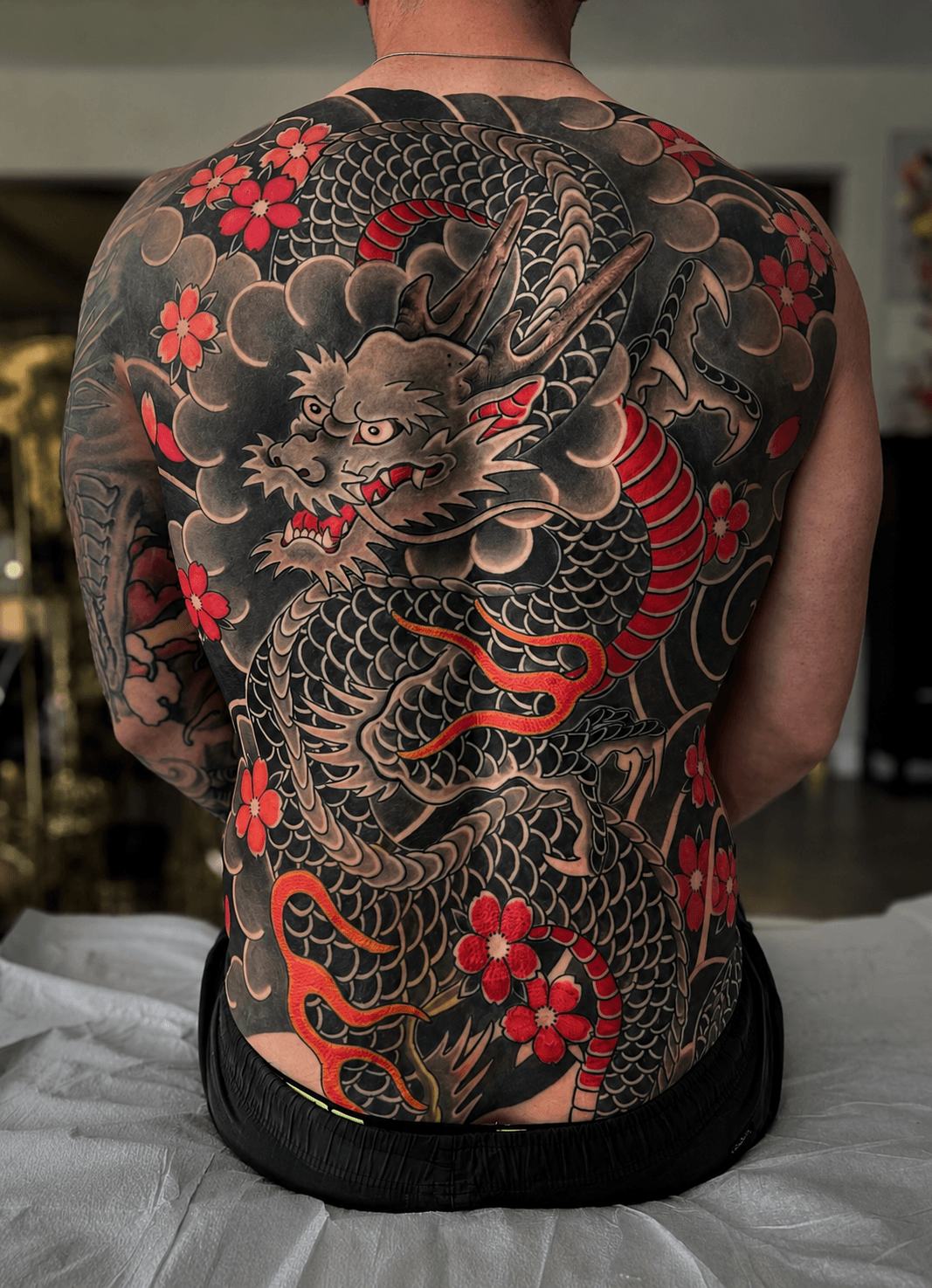
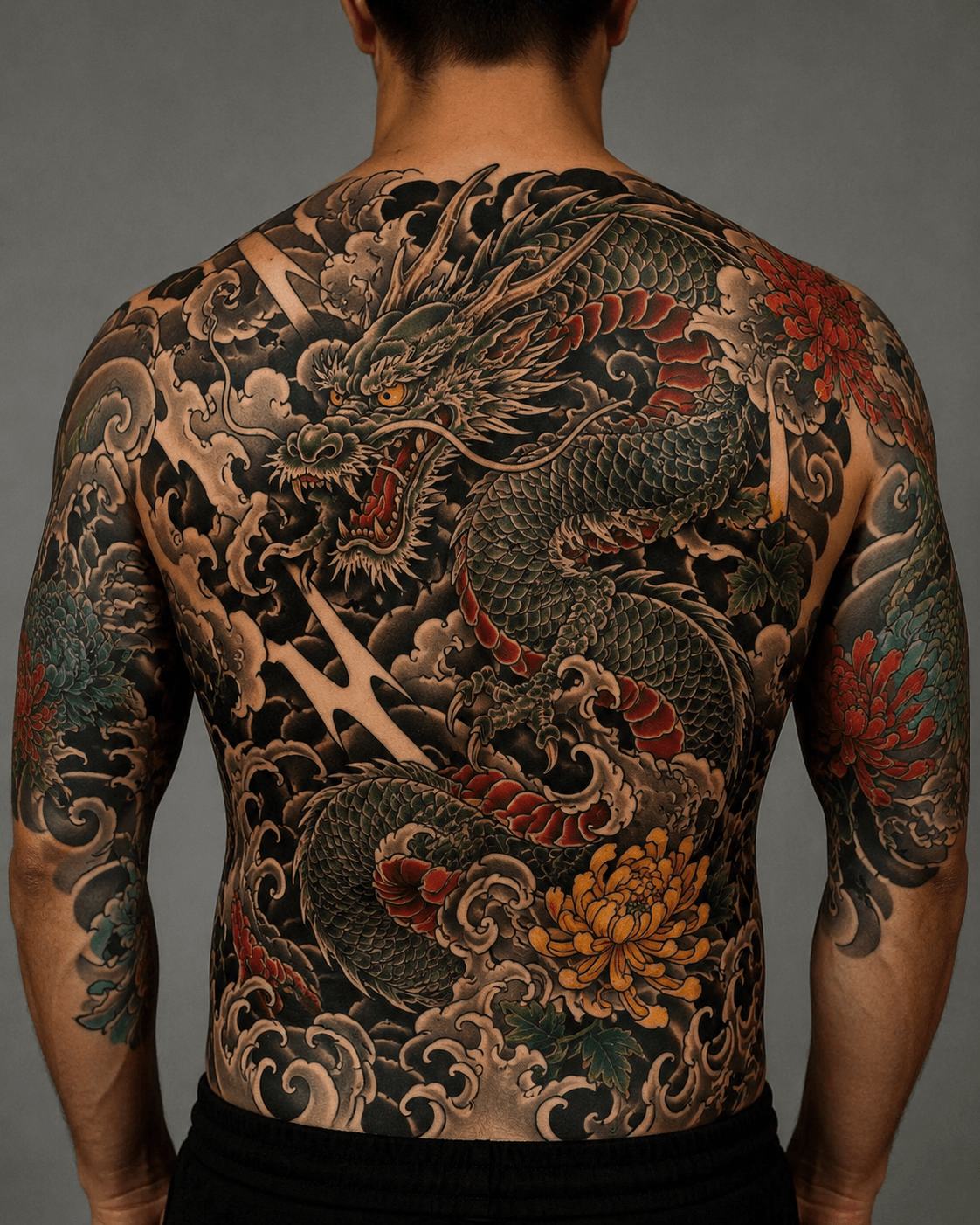
It gives enough space for a complete scene: a dragon moving through clouds, a koi swimming against waves, a samurai figure, a tiger, a phoenix or a large floral layout.
This area allows the artwork to keep its proportions and detail. Smaller placements may limit movement, while the back makes it possible to build a clear center, background and supporting details. That is why many traditional ideas are planned as one large piece rather than a set of separate images.
The placement also has historical importance. Traditional Japanese body suits were often created so they could be hidden under clothing and shown only in private settings. In modern work, the back is still chosen by people who want a strong visual result but prefer to keep it easy to cover.


Yakuza Style Tattoo: Composition, Color and Placement
This visual direction is built around flow, contrast and a strong link between the main figure and the background.
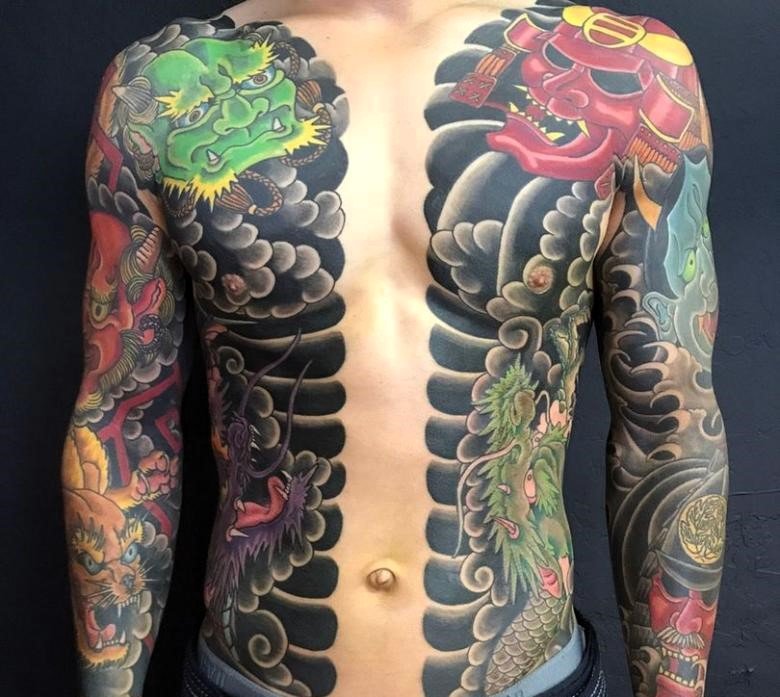
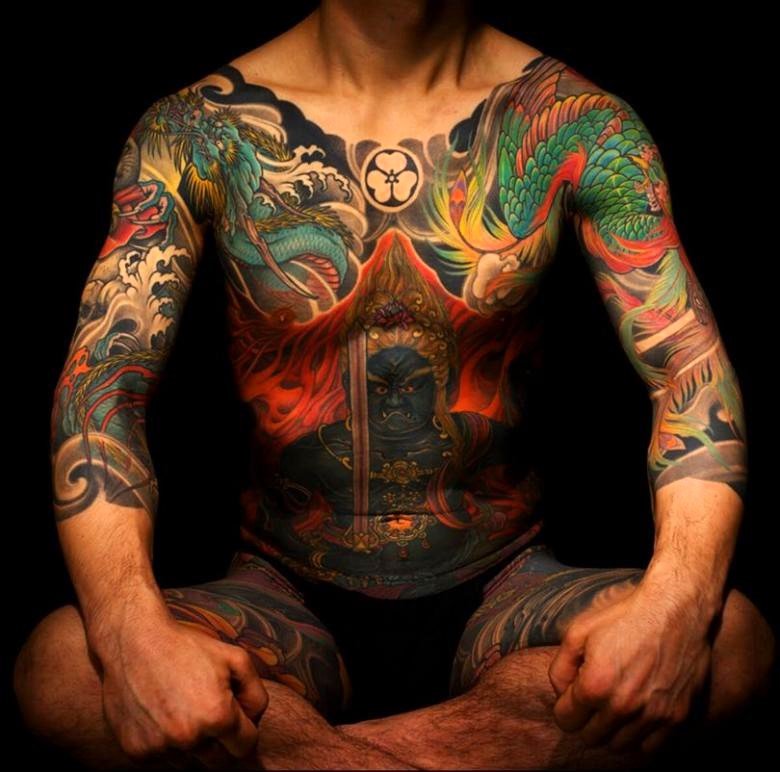
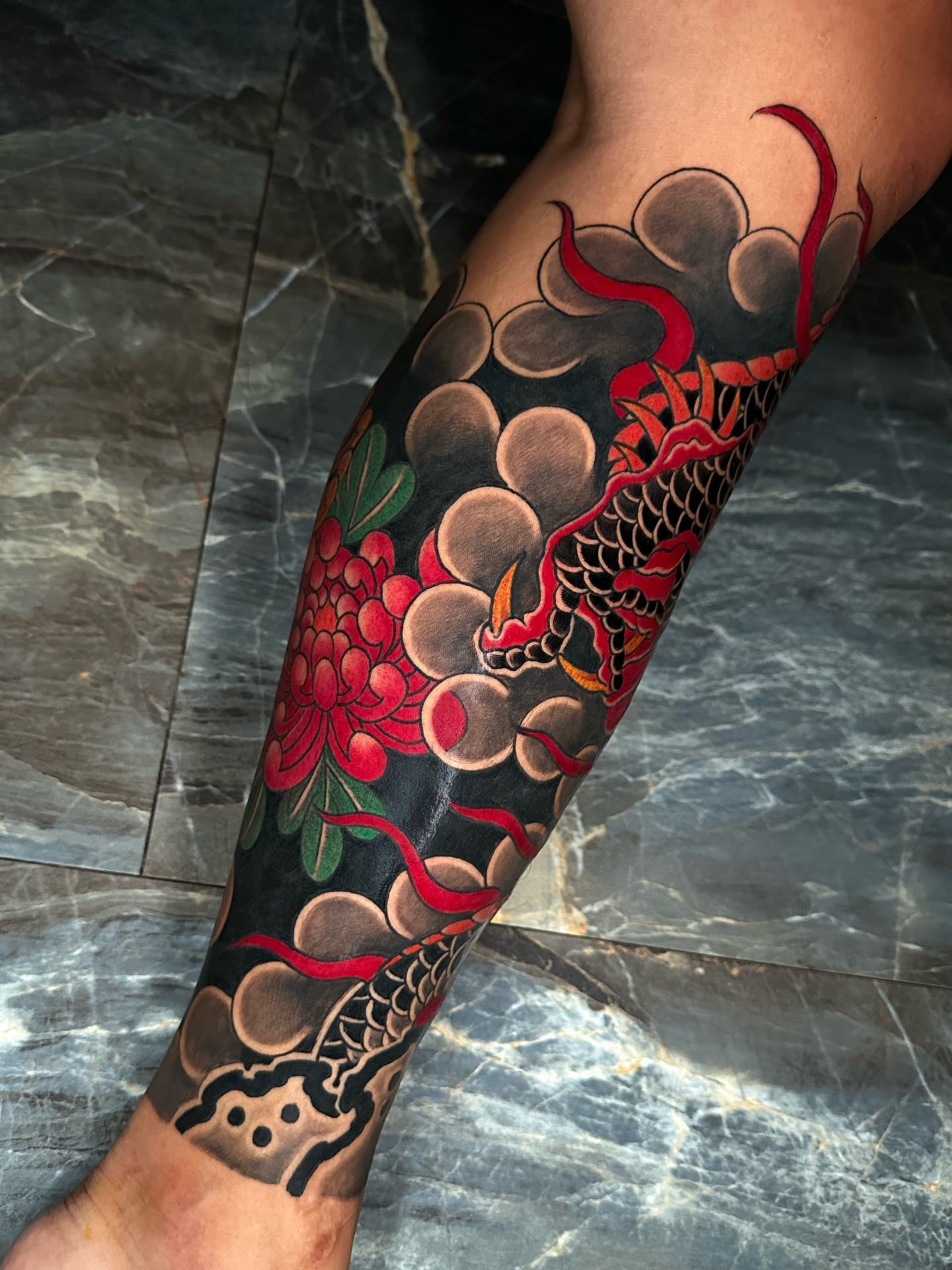
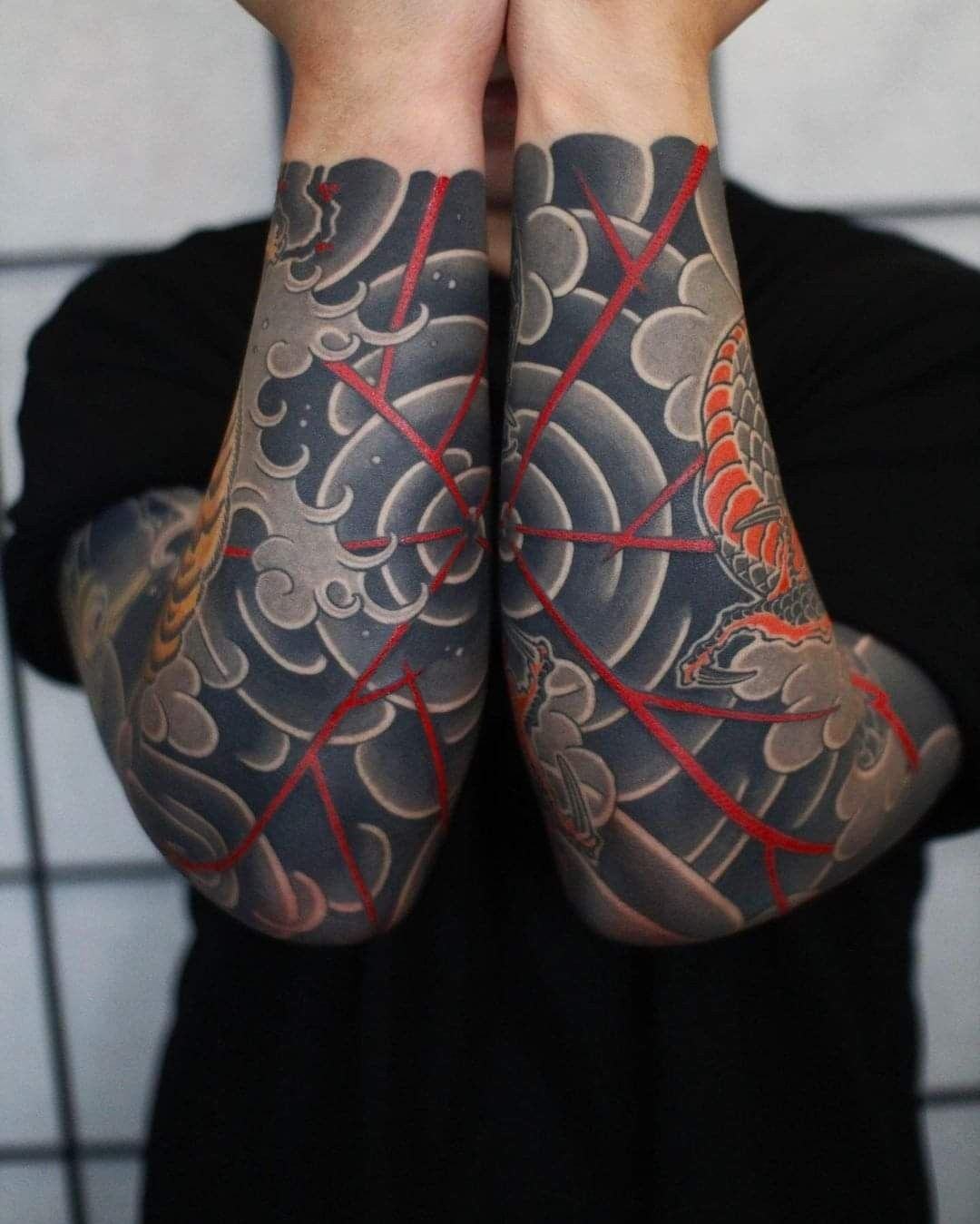
Instead of placing one symbol on empty skin, the artwork often uses waves, wind bars, clouds, fire, flowers or scales to connect different areas of the body.
Color also plays an important role. Traditional pieces often use deep black outlines, strong shading and rich tones such as red, green, blue and gold. Black and grey versions may look more restrained, but they still need clear structure so the image does not lose depth.
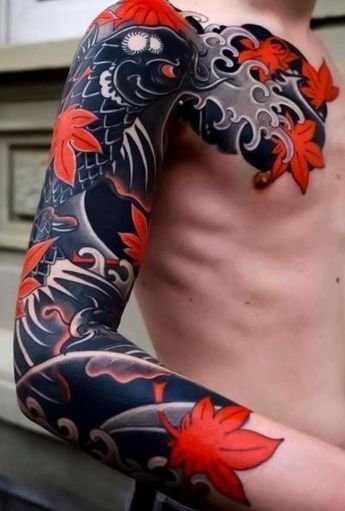
Placement should be planned before choosing the final sketch. A dragon may need space to curve along the back or arm, while koi, flowers and waves work well in a sleeve or chest layout. The strongest result appears when the image follows the body naturally instead of looking like a picture copied onto the skin.


Ideas for Different Placements and Scales
Japanese-inspired work is not limited to one type of client or one body area.
The main difference usually comes from scale, detail, placement and the mood of the sketch. Some people prefer large back pieces, sleeves or chest panels, while others choose smaller elements inspired by traditional Japanese art.
For a bold result, dragons, tigers, samurai and full-back scenes create a strong visual effect. For a softer or more balanced idea, koi fish, sakura, peonies, waves and snakes combine with lighter movement and more open space.
The most important point is whether the sketch fits the body, the chosen meaning and the level of detail. A well-planned piece should look complete from a distance and still remain interesting when viewed closely.


FAQ
- What Does This Style Mean Today?
- Today, this style is usually understood through its symbols, layout and connection with Japanese tradition. It may represent protection, discipline, transformation, loyalty, perseverance or a personal story, depending on the elements used.
- Why Do Yakuza Get Tattoos Traditionally?
- Historically, this practice was connected with identity, loyalty, endurance and belonging to a closed group. It also showed the ability to go through a long and painful process, especially when large body pieces were created by hand.
- Why Are Full Back Designs So Common?
- The back gives enough space for a complete scene with a main figure, background and supporting details. It also allows the artwork to be hidden under clothing, which was important in the traditional context.
- Which Symbols Are Most Often Used in This Style?
- Dragons, koi fish, sakura, samurai, tigers, snakes, phoenixes, masks, peonies, waves and clouds are among the most common elements. Each one changes the meaning and visual mood of the final sketch.
- Is It Appropriate to Choose a Yakuza-Inspired Design?
- It is possible to create a piece inspired by Japanese aesthetics, but it should be done thoughtfully. It is better to avoid copying criminal signs without understanding them and to focus on respectful, custom work.
- What Is the Difference Between Irezumi and This Visual Style?
- Irezumi is a broader term connected with traditional Japanese tattooing. This visual style usually refers to large layouts associated with back pieces, sleeves, chest panels and full-body work.
- Can Flowers Be the Main Element in This Type of Work?
- Yes, flowers may become a central part of the sketch, especially sakura, peonies or chrysanthemums. They make the result softer, add movement and balance stronger figures such as dragons, tigers or masks.


Modern Japanese-Inspired Tattoo Sketches at VEAN TATTOO
Large Japanese-inspired pieces need careful planning.
A full back piece, sleeve or chest layout should not be created from random separate images. The central figure, background, movement, color and empty space need to work together, especially in sketches with dragons, koi fish, samurai, tigers, flowers and waves.
Before choosing a sketch, it is worth looking at how different elements change the mood of the design. A dragon can make the composition more dynamic, koi and waves add movement, while sakura, peonies or clouds can soften the overall image and create balance.
At VEAN TATTOO, these ideas can be adapted to the body, placement, size and preferred level of detail. Browse the gallery below to compare different sketches, choose the visual direction you like and use the examples as a starting point for your own custom artwork.